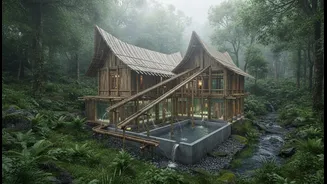









The Blueprint from the Hills
For over 200 years, the indigenous Khasi and Jaintia communities of Meghalaya have mastered the art of water management. Faced with steep, rocky terrain where conventional irrigation is impossible, they developed an ingenious system using a locally abundant
resource: bamboo. This traditional method involves tapping perennial springs and streams at higher elevations and channelling the water downhill through a complex network of bamboo pipes. The system is a marvel of gravity-fed engineering, requiring no electricity or pumps. What makes it truly remarkable is its precision; a flow of 18-20 litres per minute at the source can be slowed to just 20-80 drops per minute where it reaches a plant, ensuring efficient irrigation without waste. This timeless technology is a testament to working with the landscape, not against it.
From Bamboo to Modern Buildings
While modern construction firms may not be laying bamboo pipes across urban high-rises, they are increasingly adopting the core principles of the Khasi model. The focus is on translating this ancient logic into contemporary materials and designs for rainwater harvesting. Instead of bamboo, today’s architects and builders use a system of rooftop catchments, gutters, downpipes, and filtration units to collect and store rainwater. The key takeaway from the Khasi system is its decentralised, gravity-based approach. New housing projects are incorporating underground storage tanks and recharge wells that mimic the natural percolation of water. This integration of traditional principles with modern materials allows for the creation of self-sufficient water systems within residential complexes, reducing dependency on strained municipal grids.
The Climate-Smart Advantage
Adopting these models is a cornerstone of 'climate-smart' construction, a movement focused on building resilient and sustainable homes. By harvesting rainwater, these buildings mitigate several climate-related challenges at once. Firstly, they reduce the immense energy consumption required to pump and transport water over long distances, thereby lowering the carbon footprint of a housing development. Secondly, they offer a crucial buffer against water scarcity, a growing problem across India. In urban areas, these systems also play a vital role in stormwater management. By capturing heavy monsoon rains, they prevent localised flooding and soil erosion, which are becoming more frequent with erratic weather patterns. This approach creates homes that are not only less demanding on resources but also better equipped to handle a changing climate.
Making Sustainable Housing Affordable
A common misconception is that green technology is expensive. However, leveraging these water-harvesting principles can significantly drive down costs, making it a perfect fit for the affordable housing sector. The primary savings are long-term. For homeowners, a reduced reliance on municipal or tanker water translates directly into lower utility bills month after month. For developers, integrating rainwater harvesting systems from the design phase is more cost-effective than retrofitting them later. Furthermore, using locally sourced materials and simpler, gravity-based systems can reduce upfront construction expenses compared to complex, high-energy water infrastructure. This creates a win-win scenario: developers can build more sustainable projects, and residents benefit from lower living costs, a crucial factor in the affordable housing market.
Challenges and the Path Forward
Despite its clear benefits, the widespread adoption of these integrated water systems faces some hurdles. There is a need for greater awareness among developers and homebuyers about the long-term value of such features. Additionally, upskilling labourers and technicians to properly install and maintain these systems is crucial for their effectiveness. State and local building codes, which have begun to mandate rainwater harvesting in many areas, need to be robustly implemented and updated to encourage innovative, nature-inspired solutions over mere compliance. However, the momentum is growing. As more pioneering firms demonstrate the success of blending traditional wisdom with modern engineering, the principles mastered in the Khasi hills could become a standard blueprint for building India’s future homes.