








The Silent Erosion of History
From the iconic canals of Venice to ancient forts in India, the world's most beloved heritage sites are facing an unprecedented challenge. Climate change is not a distant forecast; it is a present and escalating reality for the places we consider timeless.
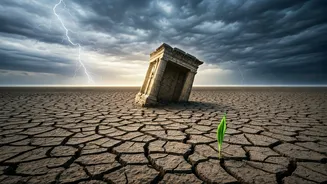
The threats are varied and complex, ranging from rising sea levels and extreme rainfall to intense heatwaves and droughts. These environmental stressors are accelerating the decay of materials, eroding foundations, and threatening the very existence of cultural landmarks that have stood for centuries. According to UNESCO, a significant percentage of its listed sites are already feeling the strain, with everything from stone and wood to ancient murals becoming increasingly vulnerable.
India's Monuments Under Pressure
India, with its vast and ancient history, is on the front lines. The Taj Mahal has seen damage from heavy rainfall, while cyclones have battered coastal treasures like the Jagannath and Konark Sun Temples in Odisha. In Rajasthan, forts built for arid climates are struggling with unprecedented rains, with a wall of Jaisalmer's 12th-century Sonar Fort collapsing after a downpour. In the Himalayas, the 11th-century Tabo Monastery in Spiti Valley, renowned for its mud-brick architecture and ancient murals, now faces damage from water seepage due to erratic and intense rainfall in a region historically defined by its cold, dry climate. The materials that have endured for a millennium are now being weakened by moisture, humidity, and the growth of algae and moss.
A Global Crisis for Culture
This is a worldwide phenomenon. Venice is a stark example, where rising sea levels have made the famous "acqua alta" or high water events more frequent and destructive, flooding St. Mark's Basilica and threatening the city's very foundation. The iconic Moai statues of Rapa Nui (Easter Island) are at risk of being swept away by coastal erosion. Even natural heritage sites are not immune; the Great Barrier Reef faces catastrophic coral bleaching due to warming oceans. Recent analysis has identified dozens of UNESCO sites, from the Sydney Opera House to the Sinharaja Forest Reserve in Sri Lanka, as being highly vulnerable to climate-related hazards like extreme heat, flooding, and drought.
The Tourism Paradox
Heritage tourism exists in a complicated relationship with this crisis. On one hand, the revenue generated from millions of visitors is often essential for funding the conservation and maintenance of these sites. On the other hand, the tourism industry itself, with its reliance on air travel and the strain of large crowds, contributes to the carbon emissions and local environmental pressures that exacerbate climate change. This creates a difficult paradox: the very act of appreciating these sites can contribute to the forces that are destroying them. The concept of 'overtourism' is now compounded by the climate crisis, forcing a rethink of how we engage with the world's treasures.
A Race Against Time
In response, conservationists and authorities are scrambling for solutions. In India, the Archaeological Survey of India (ASI) is undertaking scientific treatments and adopting climate-resilient solutions to mitigate the damage. Some efforts involve installing weather monitoring stations to better predict and prepare for extreme events. Elsewhere, more ambitious engineering projects are underway, like Venice's MOSE flood barriers, designed to protect the lagoon from high tides. There is also a growing movement to revive traditional, sustainable building techniques, such as using lime mortars instead of modern cement for repairs, as these materials are more breathable and better suited to historic structures facing moisture-related stress. However, many experts agree that these site-specific adaptations, while crucial, are not enough without global action to address the root cause of the problem.