






The Colossal Cost of Keeping Humans Alive
The single greatest argument for robotic explorers lies in what they don't need. A human mission to Mars, potentially lasting up to three years, requires an immense and costly support system. Astronauts need basics like food, water, and oxygen, all of
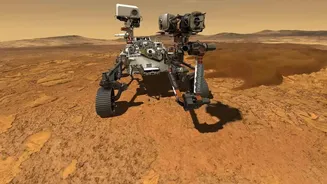
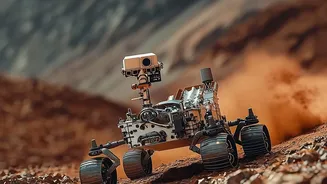
which have significant mass and must be launched from Earth or generated en route. A crew of six could require tens of thousands of kilograms of water alone for a 500-day stay on the surface. Beyond these consumables, humans need protection from the harsh realities of space: deep-space radiation and the health effects of microgravity demand heavy, complex shielding and habitats. These life-support systems exponentially increase the weight of a spacecraft, which in turn drives up fuel requirements and overall mission cost. Estimates suggest a crewed Mars mission could cost hundreds of billions of dollars, compared to the relatively modest sub-$3 billion price tag for a robotic rover like Perseverance.
The Robotic Advantage: Cheap, Safe, and Patient
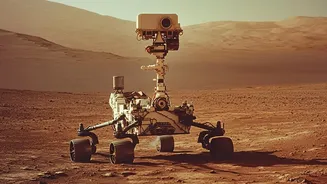
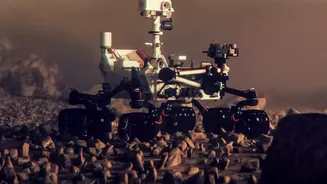
Robots are, by comparison, remarkably low-maintenance. They don't need to eat, breathe, or take breaks. Designed to withstand extreme temperatures and radiation, they can be sent into environments too hazardous for humans without a second thought. This makes them ideal for long-duration missions; the Curiosity rover has been exploring Mars since 2012, and the Voyager probes continue to send back data decades after their launch. Furthermore, robots don't need a return ticket. They can operate until their power runs out, completing their mission without the enormous engineering challenge and fuel cost of launching a return vehicle from the Martian surface. This dramatically reduces both the financial cost and, crucially, the risk to human life, which remains the highest priority for any space agency.
Where Humans Outshine the Machines
Despite the compelling case for robots, they have significant limitations. A key issue is their speed and autonomy. The Curiosity rover moves at a maximum speed of just 0.14 kilometres per hour. Every action must be carefully planned and transmitted from Earth, a process hampered by communication delays that can be as long as 40 minutes for a round trip signal. This makes robots slow and unable to react to unexpected situations or discoveries in real time. A human geologist, in contrast, can accomplish in hours what might take a rover years. Humans bring unparalleled adaptability, intuition, and problem-solving skills. An astronaut can spot something interesting, walk over to it, and decide on a new course of action in seconds—a level of flexibility that robots cannot yet replicate.
A Collaborative Future on the Red Planet
Ultimately, the debate is not about choosing one over the other. The future of Mars exploration is a synergistic one, where robots and humans work together. The most effective model involves using robotic missions as precursors, to scout terrain, identify resources, and even begin constructing habitats before the first humans arrive. NASA is already developing humanoid robots like Valkyrie to work alongside astronauts, handling dangerous or repetitive tasks to make human exploration safer and more efficient. This collaborative approach leverages the strengths of both: the cost-effectiveness and safety of robots for initial groundwork, and the unique adaptability and scientific insight of human explorers for detailed field study and discovery. Robots will do the heavy lifting and prepare the way, allowing human crews to maximise their time on the surface, focusing on complex science and exploration that only they can perform.