





Your Everyday Payments Remain Free
Let’s clear the air immediately: you, the user, will not be charged for using UPI for your daily transactions. The government and the National Payments Corporation of India (NPCI) have explicitly confirmed this. All person-to-person (P2P) transfers, like
sending money to friends or family, remain completely free, regardless of the amount. Similarly, most person-to-merchant (P2M) payments, such as buying groceries, paying for a taxi, or grabbing a coffee, will also not attract any new charges for you. The core convenience and cost-effectiveness of UPI for the average citizen are unchanged.
So, What Are These New Charges?
The confusion stems from the introduction of a Merchant Discount Rate (MDR) for a specific type of transaction. Starting October 15, 2026, a 0.4% MDR will apply to some merchant payments over ₹2,000. Crucially, this fee is not paid by the customer. It is an internal fee within the payment ecosystem, borne by the merchant's bank or payment processor. The government has also prohibited merchants from passing this cost on to customers. If an item costs ₹2,500, you pay ₹2,500. The fee is handled behind the scenes.
The Key Distinction: Bank vs. PPI
The new MDR framework does not apply to all UPI transactions. It primarily affects payments made via Prepaid Payment Instruments (PPIs) to merchants for amounts over ₹2,000. What is a PPI? Think of digital wallets (like Paytm Wallet or PhonePe Wallet) and prepaid gift cards. When you use the money stored in your wallet to pay a merchant via UPI, it's a PPI transaction. In contrast, when you use UPI to pay directly from your linked bank account, it is a standard bank-to-bank transfer. Over 99% of UPI transactions are bank-to-bank and are completely unaffected by this new fee structure. For most people, who pay directly from their bank account, this change is irrelevant.
Who Actually Pays and Why?
The MDR is a fee that helps sustain the digital payments ecosystem. When a transaction happens, several entities are involved: the customer's bank, the merchant's bank, the payment app, and the NPCI network itself. Maintaining this complex infrastructure, ensuring its security, and driving innovation costs money. For years, UPI transactions have been largely free for everyone, which, while great for adoption, put financial strain on these service providers. The new MDR is a small fee paid by the merchant's acquirer to the PPI issuer to cover these costs, ensuring the system remains viable long-term. It's a way to create a sustainable revenue model without charging the end consumer.
Protections for Small Merchants
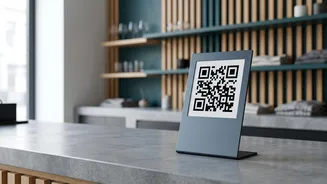
The new rules have also been designed to protect small businesses. The MDR framework does not apply to the vast majority of small and micro-merchants. For instance, vendors receiving up to ₹1 lakh per month through UPI QR codes will continue to have zero MDR on all their transactions, even those above ₹2,000. This ensures that street vendors, kirana stores, and other small enterprises that form the backbone of India's retail landscape are not burdened. The fee specifically targets a small slice of higher-value commercial transactions, leaving around 96% of all merchant transactions unaffected.