







A Geological First: Witnessing Earth's Creation
For decades, the process of seafloor spreading—the mechanism that creates new oceanic crust—was something geologists understood more through theory and ancient evidence than direct observation. That all changed in April 2024. Along a remote section of the Southeast
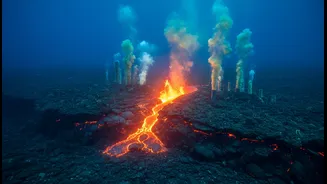
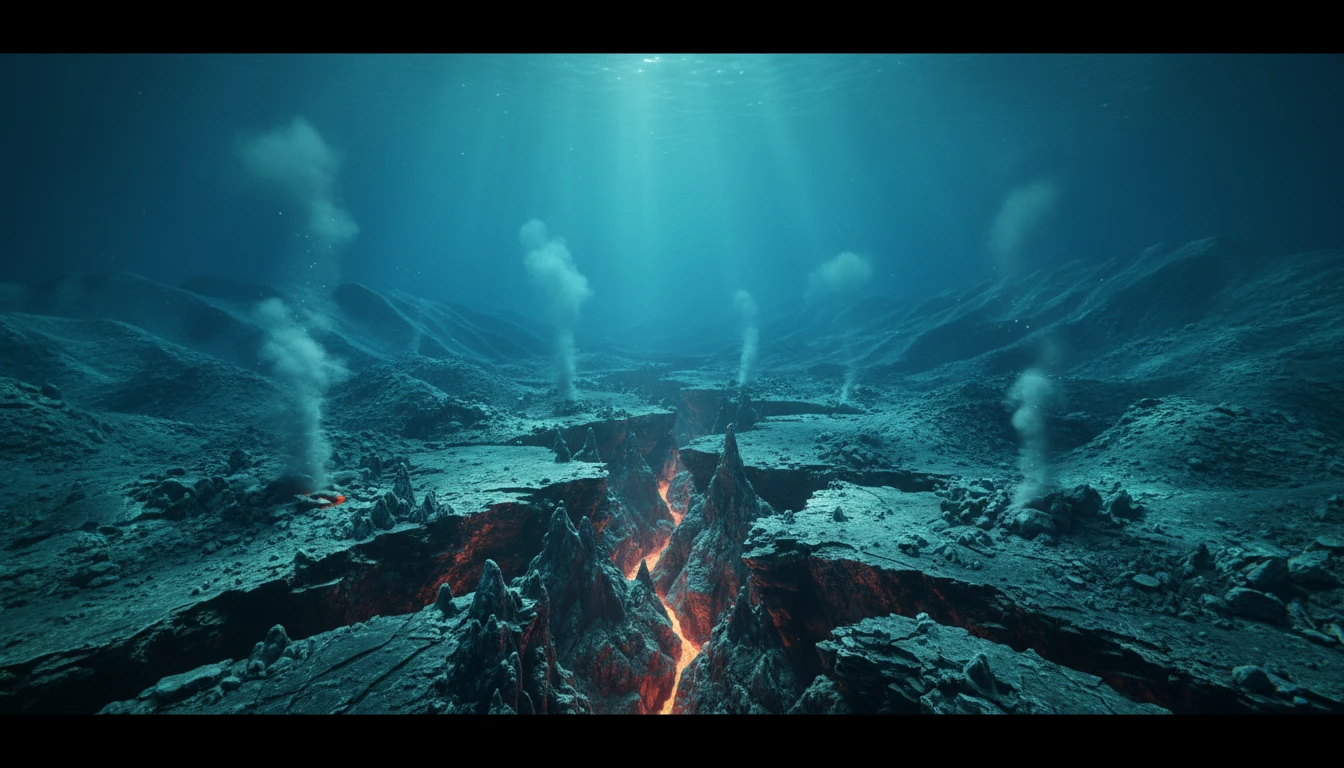
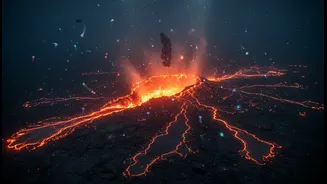
Indian Ridge, an underwater mountain range separating the Australian and Antarctic plates, an international team of scientists captured a full-scale rifting event as it happened. By a stroke of luck, they had deployed a sophisticated network of over 20 underwater sensors just two months prior, hoping to monitor long-term activity. What they recorded was nothing short of spectacular: the seafloor tearing apart, sinking by four metres, and erupting vast quantities of lava in a matter of days.
How the Seafloor Spreads
To understand the significance of this event, it helps to picture the Earth's crust not as a solid shell, but as a jigsaw puzzle of massive tectonic plates. At mid-ocean ridges, these plates are slowly pulling away from each other. As they separate, they create deep fissures, allowing molten rock, or magma, to rise from the mantle below. When this superheated magma meets the near-freezing seawater, it cools and solidifies, forming brand-new ocean floor. This process, happening continuously over millions of years, is responsible for the formation of about two-thirds of the Earth's surface. The event on the Southeast Indian Ridge, however, proved that this process isn't always slow and steady.
An Event of Immense Scale
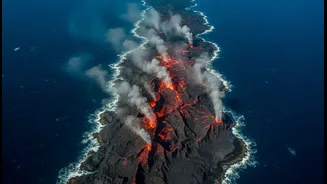
The data captured by the underwater observatory, known as OHA-GEODAMS, revealed a dramatic and rapid sequence of events. It began with a swarm of earthquakes that migrated along the ridge. Soon after, instruments measured the seafloor stretching apart by more than a metre, while the central valley floor sank. In just 16 days, an estimated 160 million cubic metres of lava poured onto the seabed, creating new crustal deposits up to 90 metres thick. This single, brief episode accomplished what would normally take 30 to 60 years of slow, steady plate movement. It proves that the Earth's crust can grow in sudden, powerful lurches rather than a gentle crawl.
Solving a Tectonic Mystery
This groundbreaking observation has also helped solve a long-standing geological puzzle. For years, scientists noticed a discrepancy: the movement recorded by underwater earthquakes didn't add up to the known speed at which tectonic plates were separating. This study provided the missing piece. The instruments revealed that a significant amount of the seafloor's movement happens through 'aseismic slip'—faults sliding and the ground shifting without causing detectable tremors. This quiet, magma-driven movement accounts for the missing motion, fundamentally reframing our understanding of how mid-ocean ridges operate and why they produce fewer earthquakes than expected.
Why This Discovery Matters
Capturing a seafloor spreading event live is more than just a scientific novelty; it provides a crucial window into the fundamental engine of plate tectonics. These processes govern the expansion of ocean basins, influence global geochemical cycles, and shape the geological features of our entire planet. By observing the complex interplay between magma, faulting, and crustal extension in real-time, scientists can refine models of everything from volcanic activity to earthquake prediction. The event even triggered seismic activity on an adjacent fault system, demonstrating how these episodes can have far-reaching consequences. This direct evidence, gathered from the depths of our neighbouring ocean, deepens our understanding of the dynamic and powerful forces constantly reshaping the world beneath our feet.