


A Ghost of a Star
When a star similar to our Sun runs out of fuel, it doesn't simply fade away. It undergoes a dramatic transformation, swelling into a massive 'red giant' before shedding its outer layers. What remains is a small, incredibly dense core called a white dwarf.
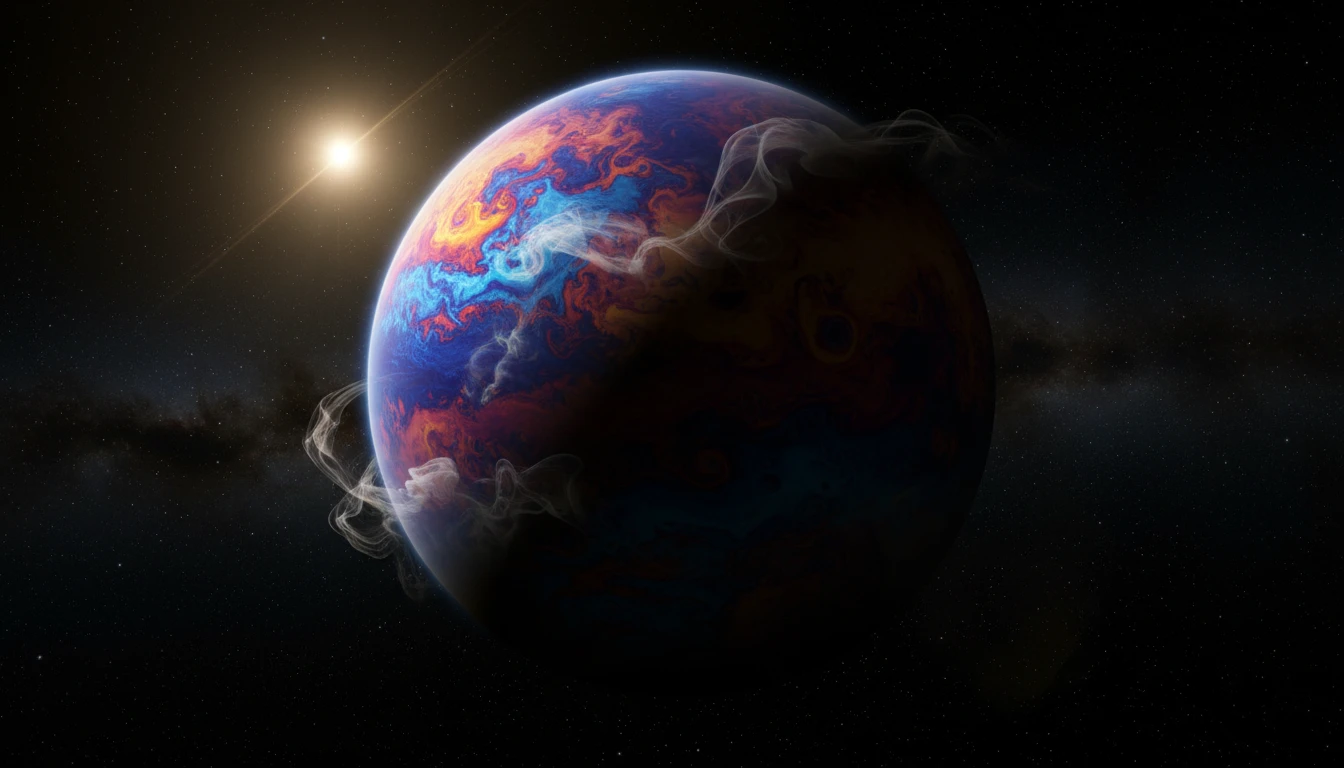
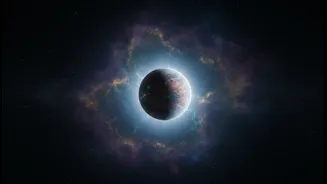
This stellar remnant is essentially the ghost of the star that once was. Packing a mass comparable to the Sun into a body the size of Earth, a white dwarf no longer produces energy through fusion. It simply glows with leftover heat, destined to cool and dim over trillions of years. For decades, astronomers assumed this violent end would obliterate any nearby planets, either by engulfing them or flinging them into deep space. Finding a stable planetary system around a white dwarf was considered highly improbable.
Surviving the Stellar Apocalypse
The journey for a planet to survive its star's death is fraught with peril. As the star expands into a red giant, it can swell to hundreds of times its original size, engulfing and vaporizing inner planets. In our own solar system, Mercury and Venus will almost certainly be destroyed when the Sun enters this phase in about five billion years. Earth's fate hangs in the balance. Even if a planet is far enough away to avoid being swallowed, the process isn't over. As the star sheds its mass, its gravitational pull weakens, causing the surviving planets' orbits to expand and become less stable. This can lead to chaotic gravitational interactions, with planets potentially being ejected from the system entirely.
New Evidence Changes Everything
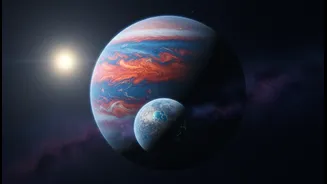
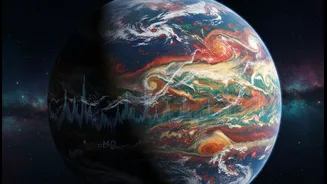
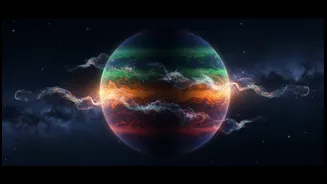
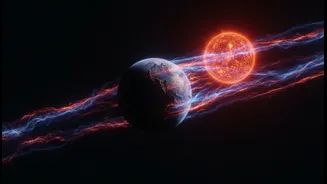
Despite the cosmic odds, recent observations have confirmed that planets can and do survive. Using powerful tools like the James Webb Space Telescope (JWST), astronomers have found multiple examples of planets, particularly large gas giants, orbiting white dwarfs. One of the most studied is WD 1856 b, a Jupiter-sized planet orbiting its dead star at an astonishingly close distance—completing a full orbit every 1.4 days. This was a puzzle, as a planet that close should have been destroyed. The answer, researchers now believe, is migration. The planet likely survived the red giant phase at a much safer, wider orbit. Then, over billions of years, gravitational nudges from other objects in the system—perhaps other planets or a companion star—caused it to slowly spiral inward to its current, stable location. This finding demonstrates that planetary systems can reorganize themselves long after the central star has died.
A Second Life for Solar Systems
The discovery of these resilient worlds opens up fascinating new possibilities. It proves that the death of a star is not the end for its planetary system, but rather the beginning of a new chapter. This has profound implications for the search for life. While the traditional 'habitable zone'—the region where liquid water can exist—is erased during the red giant phase, a new, much closer one could form around the cooling white dwarf. Some models suggest that these faint but long-lived stellar remnants could provide a stable source of warmth for billions of years, potentially long enough for life to evolve on a surviving or newly migrated planet. While a planet like WD 1856 b is a gas giant and not a candidate for life, its existence proves that the building blocks of a solar system can persist, widening the range of places where habitable worlds might be found.
A Glimpse into Our Own Distant Future
Studying these ghostly solar systems isn't just an academic exercise; it's like looking into a cosmic crystal ball. What happens to the planets around a white dwarf gives us a preview of our own solar system's ultimate fate. In about five billion years, our Sun will become a white dwarf. The inner planets may be lost, but Jupiter and Saturn are expected to survive. The new research suggests that, over the subsequent aeons, these gas giants could migrate into new orbits, potentially creating a completely rearranged solar system around the cooling ember of our Sun. The existence of planets that have endured their star's demise is a powerful testament to the resilience of matter and the surprisingly dynamic nature of the universe, even in what was once considered its final, quietest stages.