




Reduce Speed and Increase Following Distance
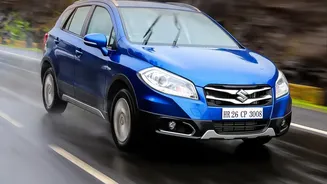
The single most important adjustment to make when driving in rain is to slow down. Speed limits are designed for ideal, dry conditions. Wet roads significantly increase your vehicle's stopping distance. Reducing your speed gives your tyres a better chance
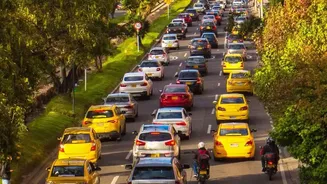
to maintain their grip on the pavement. Coupled with slowing down, you must also increase the distance between your car and the one in front. A standard three-second gap is not enough. In wet weather, you should double this to at least five or six seconds. This extra buffer provides more time to react and brake smoothly if traffic suddenly stops, reducing the risk of a collision. Remember, gentle and gradual inputs for braking and accelerating are key to maintaining control.
Prepare Your Vehicle Before You Drive
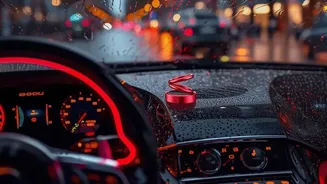
A safe journey begins before you even turn the key. Your vehicle's condition is critical, especially three key components: tyres, wipers, and lights. Tyres are your only connection to the road, so ensure they have adequate tread depth—at least 2-3 mm is recommended for monsoon conditions. Proper tyre pressure is also crucial for traction. Your windshield wipers are your window to the world in a downpour. If they are old or leave streaks, replace them. Finally, check that all your lights are working correctly—headlights, taillights, brake lights, and indicators. Clean headlights and a clear windshield also help to reduce glare and improve visibility. A well-maintained car is a much safer car in adverse weather.
Master Your Lights, But Avoid High Beams
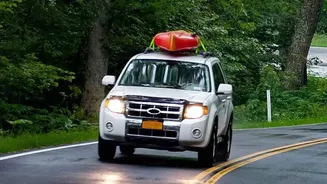
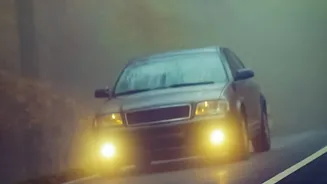
Seeing and being seen is paramount in poor visibility. Turn on your low-beam headlights whenever it's raining, even during the day. This makes your vehicle significantly more visible to other drivers. However, resist the temptation to use your high beams in heavy rain or fog. The bright light from high beams reflects off the water droplets in the air, creating a wall of glare that can blind you and oncoming drivers. Low beams are designed to illuminate the road beneath the precipitation without causing this reflective glare. If your car is equipped with fog lights, they can be helpful in dense fog or very heavy downpours, as their low, wide beam is specifically designed to cut through these conditions.
Understand and Avoid Hydroplaning
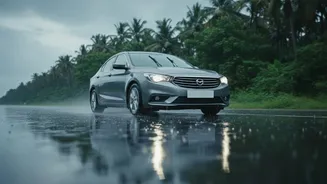
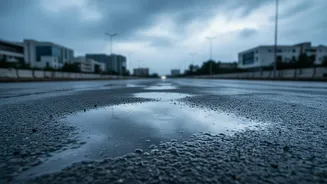
Hydroplaning, or aquaplaning, occurs when a layer of water builds up between your tyres and the road surface, causing a loss of traction and control. It can feel like you're sliding or floating. The best way to avoid it is to slow down, especially when you see standing water. Driving in the tracks of the vehicle ahead can also help, as their tyres will have displaced some of the water. If you do start to hydroplane, the key is not to panic. Do not slam on the brakes or make sharp turns, as this can cause a spin. Instead, gently ease your foot off the accelerator and keep the steering wheel pointed straight ahead until your tyres regain their grip on the road.
Drive Defensively and Be Patient
Driving in the rain isn't just about managing your own vehicle; it's about anticipating the actions of others. Be extra considerate of more vulnerable road users like motorcyclists and pedestrians, who are harder to see and have less protection. Avoid splashing through puddles near them. Because visibility is poor for everyone, use your turn signals well in advance and brake earlier and more gently than you would in the dry. Stay in the middle lanes of the road when possible, as water tends to pool in the outer lanes. Finally, eliminate distractions like your phone and turn down the radio to focus completely on the task of driving. If conditions become too severe, the safest decision is to pull over and wait for the weather to improve.