

What Are Solar Storms?
A solar storm is a massive eruption of energy from the Sun. These events can take two major forms. The first is a solar flare, which is an intense burst of radiation that reaches Earth in as little as eight minutes. The second, and often more impactful,
is a Coronal Mass Ejection (CME). A CME is a giant cloud of solar plasma and magnetic fields flung into space at incredible speeds. While the Sun ejects CMEs in all directions, the ones aimed at Earth can cause significant disturbances. These eruptions are not constant; they follow an approximately 11-year cycle of activity, and when the Sun is more active, these events become more frequent and intense.
The Direct Assault on Satellites
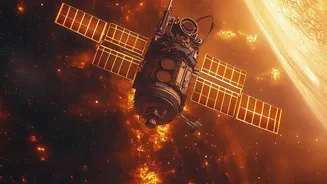
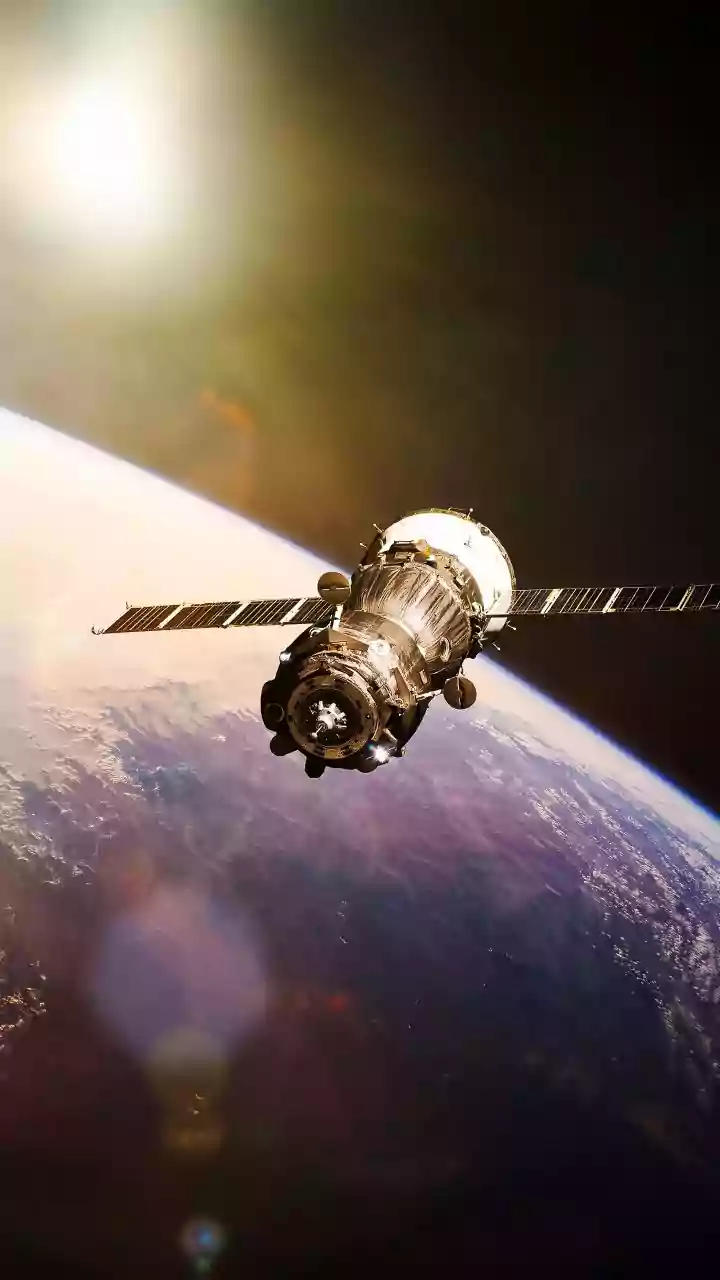
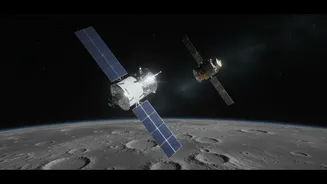
When a CME collides with Earth's magnetic field, it triggers a geomagnetic storm that can wreak havoc on satellites in two primary ways. First, the storm injects high-energy particles into space that can damage or degrade the sensitive electronics and solar panels on satellites, potentially shortening their lifespan. Second, the energy heats Earth's upper atmosphere, causing it to expand. This expansion increases the atmospheric drag on satellites in Low Earth Orbit (LEO), causing them to lose altitude faster. If they can't correct their orbit in time, they can be pulled back to Earth and destroyed. In 2022, a relatively minor storm caused the loss of 40 newly launched Starlink satellites, highlighting the vulnerability of even modern technology.
A Domino Effect on Daily Life
The consequences of satellite disruption are not confined to space. A severe solar storm could have a cascading impact on the ground. GPS and other navigation systems, which are crucial for aviation, shipping, and even ride-hailing apps, could suffer from reduced accuracy or complete blackouts. Radio and satellite communications could be interrupted, affecting everything from international broadcasts to emergency services. Furthermore, intense geomagnetic storms can induce powerful currents in long-distance power lines on the ground, potentially overloading transformers and causing widespread blackouts, as famously occurred in Quebec in 1989. Our interconnected, technology-dependent society is more vulnerable than ever to these solar outbursts.
Our Eyes on the Sun
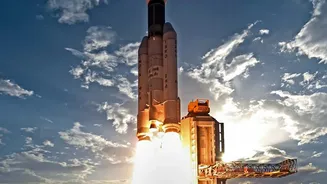
Given the stakes, predicting and tracking these solar events is a global priority. Space agencies around the world use a combination of ground-based telescopes and dedicated spacecraft to monitor the Sun for signs of an impending eruption, such as the formation and complexity of sunspots. India is a key player in this effort with its Aditya-L1 mission. Launched by ISRO, Aditya-L1 is positioned at a unique vantage point 1.5 million kilometres from Earth, allowing it to continuously observe the Sun without interruption. Its instruments study CMEs and other solar phenomena, providing crucial data that helps scientists understand the Sun-Earth connection and improve space weather forecasts. This early-warning capability is vital, giving satellite operators and grid managers precious time to take protective measures.
Entering a More Active Solar Period
The urgency for robust solar tracking is heightened by the fact that we are in Solar Cycle 25, a period of increasing solar activity. While forecasts vary, this cycle has already produced powerful flares and geomagnetic storms, with activity expected to remain high as it approaches its peak. As our reliance on satellite constellations for global internet, communication, and navigation grows, so does our exposure to the risks of space weather. Each new satellite launched represents another asset that could be damaged or disabled by a solar storm. The lessons learned from recent events and the data gathered by missions like Aditya-L1 are essential for developing strategies to protect our critical infrastructure in orbit and on the ground.