
The Bread of Sailors and Farmers
Friselle’s story begins in the sun-drenched fields and coastal waters of Puglia, the heel of Italy's boot. Its origins are ancient, with some tracing twice-baked breads back to Phoenician sailors in the 10th century BC. For centuries, it was the go-to
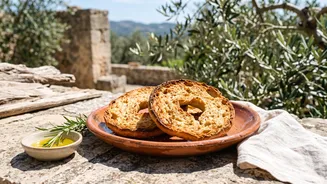
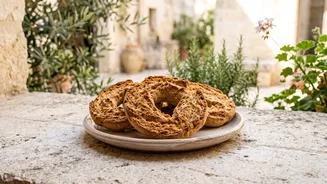
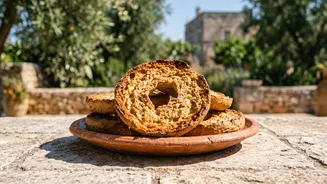
sustenance for those who needed food to endure long journeys—fishermen at sea, farmers in distant fields, and even crusaders. The bread’s signature hole wasn’t just for looks; it allowed sailors to string the rings together on a rope for easy transport and storage. Born from 'cucina povera' or 'poor man's kitchen', this humble bread was a brilliant solution for food preservation long before refrigeration existed.
The Secret of the Double Bake
What gives friselle its legendary shelf life? The answer lies in its preparation. The name itself is related to 'biscotti', which literally means 'twice-cooked' or 'twice-baked'. The dough, typically made from durum wheat or barley flour, is shaped into rings and baked a first time. While still warm, each ring is split horizontally and then returned to a low-temperature oven for a second, long bake. This process removes virtually all moisture, making the bread extremely hard and resistant to mould. When stored in a dry, airtight container, friselle can last for many months, a quality that is seeing it gain new appreciation as a reliable pantry staple.
The All-Important Ritual of 'Sponzatura'
If you tried to bite into a dry frisella, you would risk a trip to the dentist. This bread is meant to be rehydrated before eating through a ritual called 'sponzatura' or 'sponsare'. This involves a quick dip in cold water for just a few seconds—long enough to soften the hard crumb but not so long that it becomes mushy. The goal is a delightful texture that is soft on top where the toppings sit, but still has a satisfying crunch at its base. In ancient times, sailors would simply dip their friselle in seawater. Today, a bowl of fresh water works just fine, with the dipping time adjusted to your personal preference for crunchiness.
How to Enjoy Friselle the Puglian Way
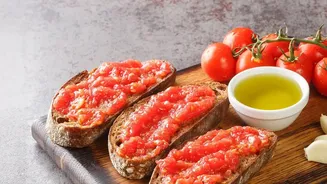
Once softened, the rough, porous surface of the frisella becomes the perfect canvas for toppings, much like its cousin, bruschetta. The most classic and beloved preparation is wonderfully simple: chopped fresh cherry tomatoes, fragrant oregano, a pinch of salt, and a generous drizzle of high-quality extra virgin olive oil. The juices from the tomatoes and the oil soak further into the bread, creating a symphony of Mediterranean flavours. Of course, the possibilities are endless. Other popular toppings include tuna, anchovies, capers, olives, or even creamy burrata, allowing this simple bread to transform into a quick lunch, a satisfying snack, or an elegant appetiser.