




The Growing Threat of Salty Soil
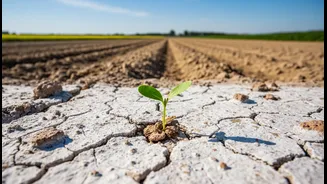
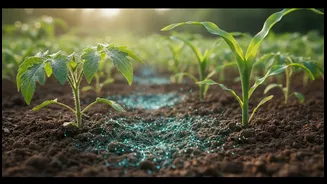
Soil salinity is a major and worsening problem for agriculture in India and around the world. When high levels of salt accumulate in the soil, it becomes toxic for most crops. The salt makes it harder for plants to absorb water, leading to a kind of agricultural
drought even when the ground is wet. This stunts growth, damages roots, and can severely impact harvests, posing a significant risk to food security. In India, an estimated 6.74 million hectares are affected by salt. This problem is driven by a combination of factors, including climate change, rising sea levels that contaminate groundwater, and irrigation practices that can leave salt deposits behind as water evaporates. The financial toll is immense, with salinity causing losses of millions of tons of crops annually.
Nature's Tiny Allies
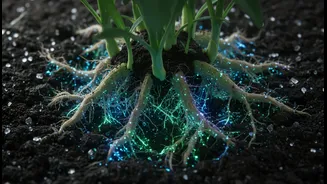
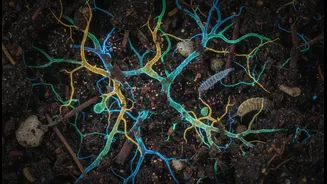
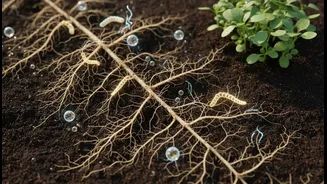
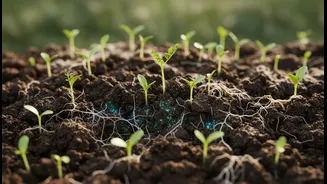
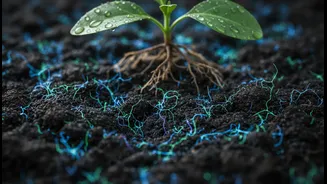
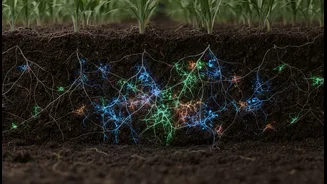
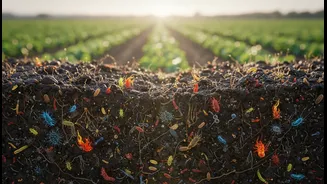
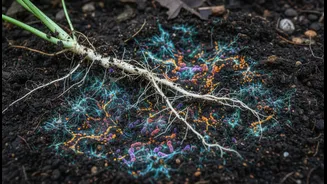
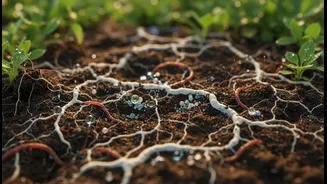
In the fight against this salty scourge, researchers are turning to some of the smallest forms of life on Earth: microbes. The soil around a plant's roots, known as the rhizosphere, is teeming with bacteria and fungi. Many of these organisms live in a symbiotic relationship with plants, helping them access nutrients and fend off diseases. Scientists are particularly interested in a group called Plant Growth-Promoting Rhizobacteria (PGPR) and endophytic microbes, which live inside the plant's tissues. Remarkably, some of these microbes are naturally found in high-salt environments, suggesting they have evolved ways to not only survive but also help their plant hosts cope with the stress.
How Microbes Counteract Salt
So, how exactly do these microscopic partners help? Researchers have discovered several clever mechanisms. Some microbes produce special hormones, like auxins, that encourage stronger and longer root systems, allowing plants to better search for water and nutrients. Others help the plant manage its ion balance, reducing the uptake of toxic sodium ions (Na+) and increasing the absorption of beneficial potassium ions (K+). Another key strategy involves the enzyme ACC deaminase, which some bacteria produce. This enzyme lowers the plant's production of ethylene, a stress hormone that can inhibit growth in high-salt conditions. This essentially tells the plant to stay calm and carry on growing, despite the stressful environment.
A Surprising Discovery
Recent research has unveiled an even more surprising mechanism. A study led by researchers from the University of East Anglia and Chinese collaborators found that certain bacteria don't just manage salt, they prompt the plant to physically reinforce itself. They discovered that in salty conditions, plants actively recruit beneficial bacteria called pseudomonads to their roots. Instead of just helping the plant block salt, these bacteria stimulate the plant to produce more lignin, a tough, wood-like substance. This increased lignin content—by over 30% in some cases—strengthens the plant's cellular structure, acting like a shield that makes the roots more resilient to the harsh, salty environment. This finding suggests the plant-microbe partnership is more complex and proactive than previously understood.
From Lab to Farmland
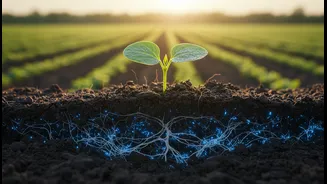
This promising research is already moving out of the laboratory and into the field. In multiple studies, seeds or seedlings of crops like tomato, maize, and soybean were inoculated with salt-tolerant microbes and then grown in saline soils. The results have been significant. Plants treated with the microbes showed better development, stronger root systems, and higher yields compared to untreated plants under the same salty conditions. In India, institutes like the Central Soil Salinity Research Institute (CSSRI) are at the forefront of developing strategies for 'bio-saline agriculture', which includes exploring the use of these natural biological tools to make farming on marginal lands viable. The goal is to develop bio-fertilisers or seed treatments that farmers can easily apply to give their crops a fighting chance against salinity.