






The Science Behind the Smell
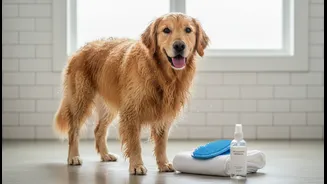
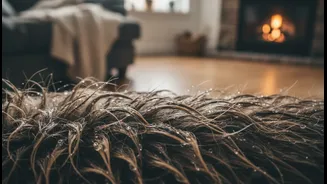
That infamous "wet dog smell" isn’t actually caused by the water itself. It’s the result of moisture interacting with the microscopic world living on your dog's coat. Every dog’s fur is home to a natural collection of yeasts and bacteria. When dry, the waste
products these microorganisms produce are barely noticeable. But when you add water from a rainy walk, a swim, or a bath, it breaks down these chemical compounds and releases them into the air. As the water evaporates from your dog’s fur, it carries these smelly particles with it, and the increased humidity allows the air to hold even more of these odour molecules, magnifying the effect throughout your home.
Prevention Starts Before They Get Wet
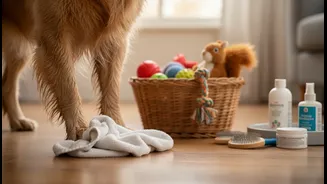
The most effective way to combat odour is to manage your dog's coat health proactively. Regular grooming is essential. Brushing your dog several times a week removes loose fur and dander that can trap moisture and fuel odour-causing bacteria. A healthy coat is less prone to holding onto smells. While it might seem counterintuitive, avoid over-bathing your pet. Washing too frequently can strip natural oils, disrupting the skin's pH and sometimes making odour problems worse. Generally, a bath once a month is sufficient for most dogs unless they get particularly dirty. Finally, keeping your dog's bedding, blankets, and favorite soft toys clean by washing them weekly can significantly reduce the overall scent load in your home.
An Immediate Action Plan for Wet Fur
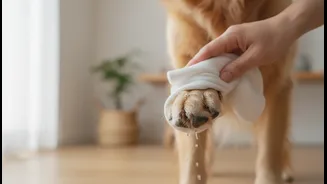
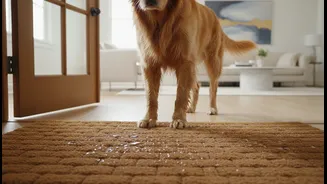
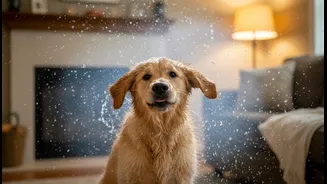
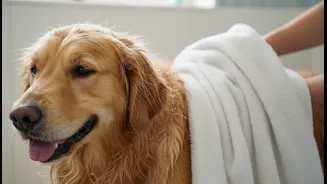
When your dog comes inside soaked, your first few minutes of action are critical. The goal is to remove as much water as possible, as quickly as possible. Start by letting your dog have a good shake outside or in a designated, easy-to-clean area like a mudroom or bathroom. Instead of vigorously rubbing them with a towel, which can create tangles and may not effectively dry the undercoat, use a highly absorbent microfiber towel. Press the towel firmly against their body, allowing it to wick moisture away from the skin. Work from head to tail, paying extra attention to the chest, belly, and armpits where water tends to collect. For dogs with thick or long coats, a pet-specific blow dryer on a low, cool setting can be a game-changer for getting them completely dry.
Deodorizing Your Carpets and Furniture
Once the smell has settled into fabrics, you need to neutralize it at the source. Baking soda is a fantastic and inexpensive natural deodorizer. Sprinkle it generously over carpets, rugs, and upholstered furniture. Let it sit for at least 30 minutes, or even overnight for strong smells, before vacuuming it up thoroughly. For a more active approach, a simple spray made of equal parts white vinegar and water can be lightly misted onto fabrics. The vinegar smell will be strong at first but will dissipate as it dries, taking the pet odours with it. For persistent smells, especially from pet accidents, an enzyme-based cleaner is essential as it breaks down the organic proteins causing the odour.
Clearing Odours From the Air
Tackling surfaces is only half the battle; you also need to address airborne odours. The simplest step is ventilation—opening windows and doors to create a cross-breeze helps clear out stale, smelly air. For a more continuous solution, an air purifier with a HEPA filter is highly effective at trapping pet dander and other airborne particles. Models with an activated carbon filter are even better, as the carbon specifically absorbs and neutralizes odour molecules. You can also place bowls of white vinegar or activated charcoal bags in smelly rooms to passively absorb odours from the air.