







An Escape from City Lights
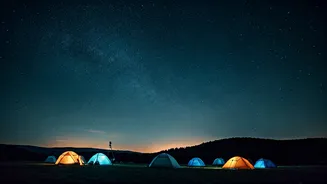
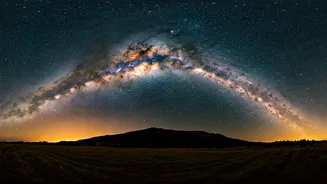
Imagine this: the air is crisp and cool, the only light comes from a crackling campfire and a canopy of stars so dense it feels almost within reach. This isn't a remote Himalayan retreat, but a scene playing out on the outskirts of cities like Mumbai,
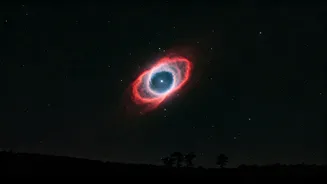
Bengaluru, and Delhi. Here, groups of students, families, and professionals gather with a shared purpose. They are part of a growing movement of amateur stargazers, trading the noise of urban life for the profound silence of the cosmos. Their mission on nights like these is often specific and ambitious: to catch a glimpse of celestial wonders, and a current favourite is the beautiful but elusive Ring Nebula.
The Ghost of a Dying Star
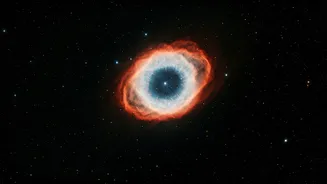
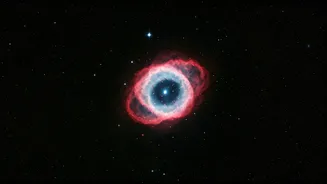
So, what exactly is the Ring Nebula? Known to astronomers as Messier 57 (M57), it’s often described as a cosmic smoke ring or a celestial doughnut. Located about 2,300 light-years away in the constellation Lyra, this object is a planetary nebula. But the name is misleading; it has nothing to do with planets. Instead, it’s the glowing, expanding shell of gas that was shed by a dying star, similar to our own Sun, thousands of years ago. At its centre sits a tiny, incredibly dense white dwarf—the star’s remnant core. For amateur astronomers, spotting the Ring Nebula is a rite of passage. Through a decent telescope, it appears as a faint, ghostly ring, a delicate and hauntingly beautiful testament to the lifecycle of stars.
A Community Under the Stars
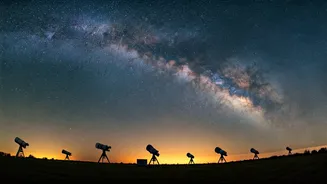
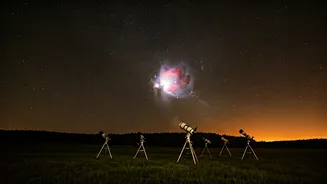
The magic of these events isn't just in the sky; it's on the ground. Astronomy clubs like Khagol Mandal in Mumbai, the Bangalore Astronomical Society, and the Amateur Astronomers Association of Delhi are at the forefront of this trend. They are volunteer-run communities fueled by passion and a desire to share knowledge. These overnight camps, or 'star parties,' are meticulously planned. Organisers scout for locations with minimal light pollution—often farmlands, remote resorts, or designated dark-sky spots—which is a significant challenge in rapidly urbanising India. The atmosphere at these gatherings is collaborative, not competitive. Experienced members guide newcomers, helping them navigate the constellations and operate telescopes. It’s a space where a software engineer can learn from a high-school student, united by a sense of wonder.
More Than Just Stargazing
The 'camping' aspect is as important as the 'stargazing'. It transforms a niche scientific hobby into a weekend adventure. For many city dwellers, it’s a rare opportunity to disconnect from screens and reconnect with nature. The day might be spent on short treks or in workshops on astrophotography, while the evening is for setting up equipment. As darkness falls, the serious sky-watching begins. But in between spotting galaxies and nebulae, there are shared meals, stories exchanged around a fire, and the simple joy of sleeping under an open sky. This blend of science, nature, and community is what makes these events so popular, often selling out within days of being announced.
How to Join the Cosmic Hunt
Feeling inspired to join? The good news is that the amateur astronomy community is incredibly welcoming to beginners. The first step is to search online for an astronomy club in your nearest city. Most have active social media pages or websites where they announce upcoming events. For a first-timer, there's no need to own a telescope; clubs and fellow members are usually happy to share their views. Essential items to bring include warm clothing (it gets surprisingly cold at night, even in summer), a red-light torch (to preserve night vision), a sleeping bag, and plenty of curiosity. The key is to come with an open mind. You might not see Hubble-like images, but you will see the universe with your own eyes, guided by people who love it.