







A Discovery Deep in the Mud
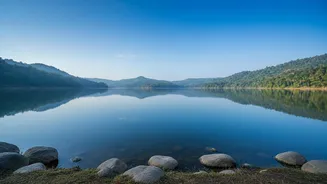
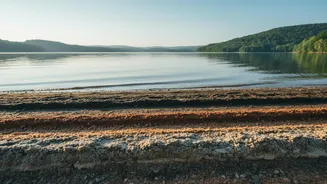
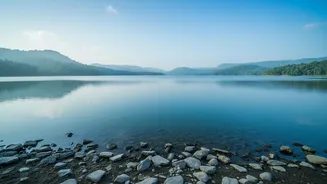
In the Korba district of Chhattisgarh, scientists from the Birbal Sahni Institute of Palaeosciences (BSIP) in Lucknow drilled into the bed of Raja Rani Lake. They pulled up a 40-centimetre-long core of sediment—a layered archive of mud that has settled
over millennia. Within these layers, they found microscopic pollen grains that were perfectly preserved. These tiny particles, shed by plants that grew in the area, act as witnesses to the past, offering a direct window into the environment from as far back as 2,500 years ago. This specific location is critical because it sits in India's Core Monsoon Zone (CMZ), the region that receives the vast majority of the country's annual rainfall, making it highly sensitive to climatic shifts.
The Science of Reading Pollen
The study of ancient pollen and spores is called palynology. Think of it as environmental forensics. Plants produce enormous quantities of pollen, which gets scattered by the wind and settles on land and in water. Because the outer shell of a pollen grain is incredibly tough, it can survive for thousands, or even millions, of years when buried in sediment, free from oxygen. By identifying the types of pollen in different layers of sediment, scientists can reconstruct what the vegetation of an area looked like. Pollen from trees that love water points to a wet, humid climate, while pollen from grasses and shrubs can indicate drier periods. This allows researchers to piece together a detailed timeline of past climatic conditions.
A Stronger, Wetter Past
The pollen from Raja Rani Lake held a surprise. It revealed that between roughly 1,060 and 1,725 CE, the region was not a sparse savannah but was dominated by moist and dry tropical deciduous forests. This indicates that the Indian Summer Monsoon during this period—a global warm phase known as the Medieval Climate Anomaly—was significantly stronger and more intense than previously believed. The evidence points to a warm, humid climate with intense rainfall, challenging some existing models that suggested drier conditions in parts of the monsoon zone during this time. This finding was attributed to a combination of factors, including La Niña-like conditions in the Pacific Ocean, which are known to enhance India's monsoon.
Why Old Records Need a New Look
This Chhattisgarh discovery serves as a powerful reminder that science is a process of constant refinement. The headline's call to "review pollen records" stems from the fact that one significant, well-preserved data set can challenge long-held assumptions. A 2024 study noted that modern pollen records don't always perfectly represent the surrounding vegetation; some trees are under-represented or their pollen doesn't preserve well. Therefore, when a high-quality record like the one from Raja Rani Lake emerges, it provides a new benchmark. It forces scientists to look back at older, perhaps less complete, records from other regions and ask new questions. Could previous interpretations have been skewed by incomplete data? This new evidence from the heart of the monsoon zone provides a clearer, more robust picture that must now be used to re-evaluate other findings across the subcontinent.
Connecting the Past to Our Future
Understanding the history of the Indian Summer Monsoon is not just an academic exercise. The monsoon is the lifeblood of the subcontinent's agriculture and economy. By creating a more accurate picture of how the monsoon has behaved during past climate phases, like the Medieval Climate Anomaly, scientists can improve the models used to predict its future behaviour. As the planet currently undergoes rapid warming, these ancient records provide crucial insights into how natural systems might respond. The findings from a small lake in Chhattisgarh could ultimately help us better anticipate and prepare for future shifts in our most critical weather system, strengthening our understanding of climate trends and their potential impact.