



From Boredom to Bonding
A heatwave can be tough on pets, especially active dogs who live for their daily walks and park runs. Pent-up energy can lead to restlessness and unwanted behaviours. While physical exercise is important, this project is also a fantastic source of mental
stimulation. Teaching your pet to navigate a new environment, follow commands, and solve simple physical puzzles engages their brain, builds confidence, and strengthens the bond you share. It transforms a boring day indoors into a rewarding training and play session for you both.
Preparing Your Indoor Arena
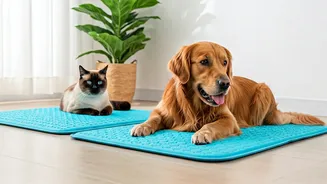
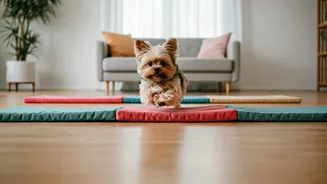
Before you start building, safety is paramount. Choose a room with adequate space, preferably one with a non-slip floor like a carpeted living room. If you have hardwood or tile floors, lay down yoga mats or runners to provide grip and prevent your pet from sliding and potentially injuring themselves. Clear the area of any breakable items, sharp corners, or clutter. You want an open, safe space where your pet can focus on the game without any hazards. Also, ensure the room is cool; turn on the AC or a fan to prevent your pet from overheating, even with indoor exercise.
Obstacle 1: The Cushion Weave
This is a classic agility element that’s easy to replicate. Gather four to six large sofa cushions or sturdy pillows. Stand them on their long edge in a straight line, leaving enough space between them for your pet to comfortably weave through—about two feet apart is a good starting point. This obstacle challenges your pet’s coordination and ability to follow directions. To begin, use a high-value treat to lure them slowly through the weave pattern, saying “weave” or “through.” Praise them enthusiastically as they get the hang of it.
Obstacle 2: The Low-Profile Tunnel
You don’t need a professional-grade tunnel for this. A simple, inviting crawl-through can be made with chairs and a blanket. Place two dining chairs a few feet apart, facing each other. Drape a blanket over the top to create a simple tunnel. To make it more cushion-focused, you can create a channel between two sofas or line up a row of sofa back cushions to form walls, then drape a blanket over them. Make sure the entrance and exit are wide and inviting. Coax your pet through with a treat, keeping it short and fun so they don't feel trapped.
Obstacle 3: The Pillow-Stack Jump
High jumps on hard surfaces are a no-go, but a soft, low jump is great for confidence. Stack two or three flat, stable pillows or floor cushions to create a low barrier—no more than a few inches high for small dogs or beginners. The goal isn’t height; it’s about teaching the concept of going “over.” Hold a treat on the other side and use a command like “jump” or “over.” Keep it low to protect your dog's joints. As they become more confident, you can use a slightly taller but still very soft cushion.
Game On: Running the Course
Once you have your obstacles set up, it’s time to play. Guide your pet through the course one obstacle at a time, using lots of praise and treats. Keep sessions short and sweet—five to ten minutes is plenty to start. You’re not training for a competition; you’re having fun. If your pet seems hesitant about an obstacle, don't force them. Go back to an easier step or simply play a different game. The entire experience should be positive. As they get better, you can link the obstacles together, guiding them from the weave, to the jump, and through the tunnel in one continuous, exciting run.