



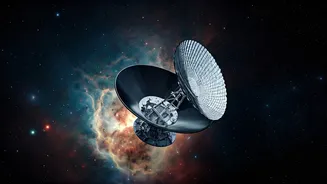


The Science of Silence
On Earth, sound is a constant companion. It’s a mechanical wave, a vibration that travels by causing particles in a medium—like air, water, or a solid object—to bump into their neighbours. [1, 7] Think of it like a ripple in a pond or a domino effect
at the molecular level. When you speak, your vocal cords vibrate, creating pressure waves in the air that travel to someone's ear. [4] Without a medium, there are no particles to carry these vibrations. [1] Space is the closest thing to a perfect vacuum we know. While it's not completely empty—interstellar space has about one atom per cubic centimetre compared to the 10 billion billion molecules in the air we breathe—the particles are simply too far apart to transmit sound waves. [2, 15] An explosion, no matter how massive, would have nothing to push against, and its sound would die instantly. [3]
Pockets of 'Noise' in the Void
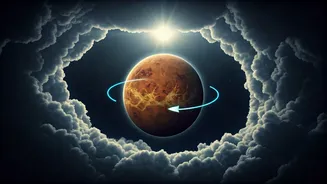
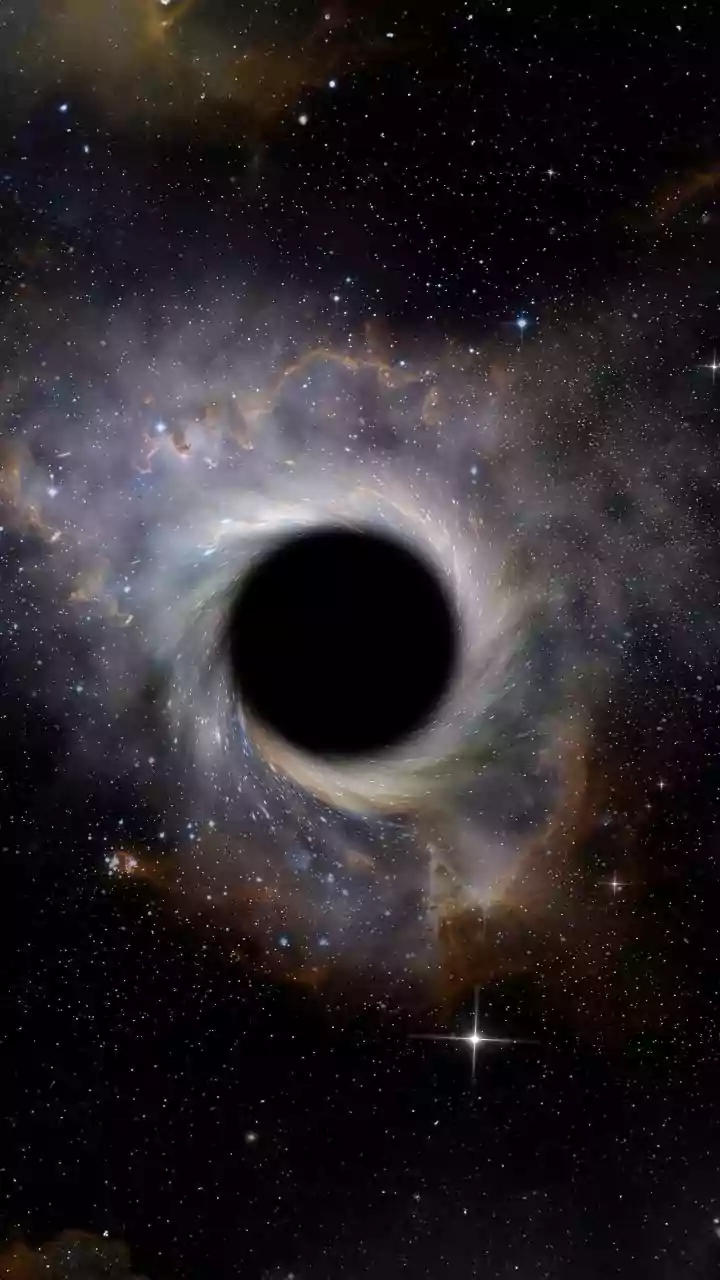
While the vastness of interstellar and intergalactic space is silent, the universe isn't uniformly empty. [19] Some regions, like dense nebulae and massive gas clouds, do have enough matter to carry pressure waves. [3, 27] However, this isn't sound as we would recognise it. The gas is so diffuse that the waves have incredibly long wavelengths and low frequencies, far below the range of human hearing. [22, 30] For example, NASA captured data from the Perseus galaxy cluster showing how pressure waves ripple through the plasma surrounding a supermassive black hole. [15] By transposing these waves up 57 octaves into the audible range, they created a haunting, low-pitched 'growl'—the sound of a black hole moving through intergalactic gas. [15, 19] Similarly, atmospheres on other planets can carry sound, though it would sound very different. On Mars, the thin carbon dioxide atmosphere would make sounds quieter and more muffled, whereas on Venus, the incredibly dense atmosphere would make your voice sound deeper and slower. [25, 26]
How We 'Listen' to a Silent Universe
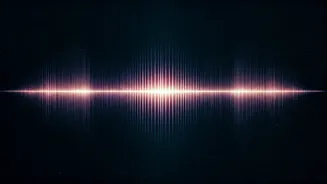
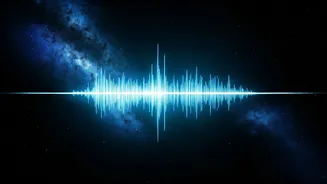
If space is silent, how can NASA release 'sounds' from space? The answer lies in a process called data sonification. [12, 13] Scientists, often in collaboration with musicians, translate data from telescopes like the Chandra X-ray Observatory and the James Webb Space Telescope into audible sound. [13, 14] This isn't a recording, but a representation. For example, the brightness of a star or galaxy in an image might be mapped to pitch or volume. [12] Different colours, representing different wavelengths of light (like X-ray or infrared), can be assigned to different musical notes or instruments. [14] This innovative approach makes cosmic phenomena accessible to visually impaired communities and offers everyone a new, intuitive way to experience the universe. [13] It allows us to hear the rhythm of a spinning pulsar, the swell of a stellar nursery, or the delicate chimes of distant galaxies, creating a symphony from data that would otherwise be silent. [12, 14, 18]
A Universe of Silent Wonders
The silence of space is a profound concept. It underscores the unique conditions that make life and perception possible on Earth. Our world is shaped by the constant transmission of energy through a dense, life-sustaining atmosphere, a stark contrast to the near-total emptiness that dominates the cosmos. [8] This vacuum means that while light from a distant supernova can travel across billions of light-years to reach our telescopes, the cataclysmic sound of that explosion never leaves its source. [3] The eerie quiet is a fundamental property of our universe, broken only by the rare pockets of gas dense enough to carry the universe's deepest notes and by our own ingenuity in turning light and data into music. [30]