






The Balcony Gardener’s Dilemma
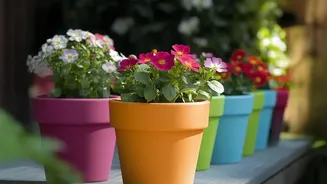
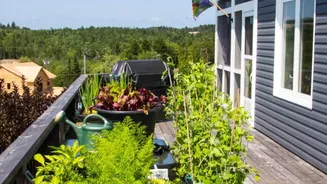
Container gardening presents a unique set of challenges. Unlike plants in the ground, pots and planters have a limited volume of soil that can dry out quickly or, conversely, become waterlogged. Overwatering is one of the most common reasons houseplants
and container gardens fail. It suffocates the roots, preventing them from absorbing oxygen and nutrients, which leads to root rot and a slow, wilting demise. For busy individuals or those new to gardening, trying to gauge when to water by sticking a finger in the soil is often a shot in the dark. A plant might look droopy because it's thirsty, or because its roots are drowning—a confusing signal that leads many to water again, compounding the problem.
What Are IoT Soil Moisture Probes?
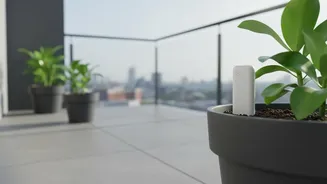
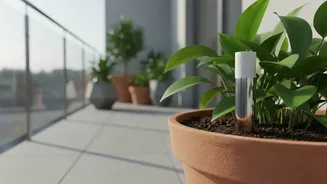
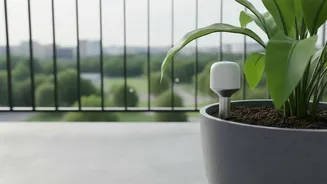
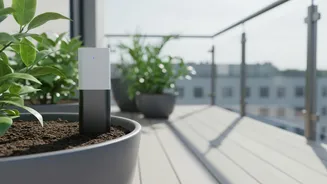
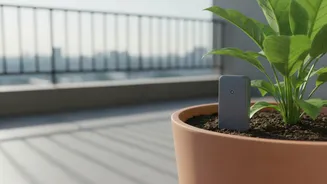
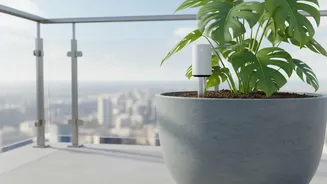
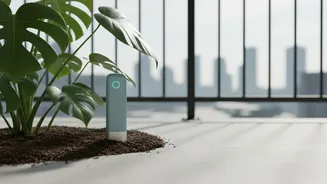
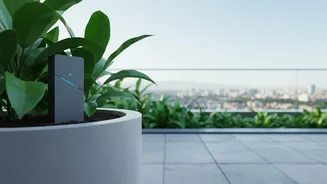
Enter the Internet of Things (IoT). In simple terms, an IoT device is a physical object with sensors that connects to the internet to share data. An IoT soil moisture probe is a small stake you place in your plant’s pot. This probe continuously measures the volumetric water content in the soil. It then sends this data, often via Bluetooth or Wi-Fi, directly to an app on your smartphone. This provides real-time, precise information about what’s happening at the root level, transforming plant care from a guessing game into a data-driven science. Instead of watering on a fixed schedule, you water only when the plant actually needs it.
The End of Watering Guesswork
The primary benefit of a smart sensor is clarity. The app provides a simple, easy-to-understand reading, often on a percentage scale from 'dry' to 'wet'. Many apps come with a database of thousands of plants, allowing you to select your specific variety—be it a ficus, a fern, or a flowering petunia—and receive customized watering thresholds. The app will then send you an alert when the soil moisture drops below the ideal level for that particular plant. This approach takes into account that every plant is different and that its needs change with the seasons, the temperature, and its growth cycle. It eliminates the anxiety and uncertainty, letting you water with confidence.
More Than Just Moisture
While moisture is the main event, many of today’s advanced probes offer a more holistic view of your plant’s environment. These multi-function sensors can also measure ambient light intensity, air temperature, and even the level of nutrients (fertilizer) in the soil, measured by electrical conductivity. This gives you a complete picture of your plant's living conditions. You can find out if your plant is getting enough sun, if the temperature is right, or if it’s time to add fertilizer. This wealth of information empowers balcony gardeners to create the perfect microclimate for each of their plants to flourish.
Choosing the Right Sensor for Your Balcony
The market for smart plant sensors has grown, with options to fit different needs and budgets. Models like the Xiaomi Mi Plant Monitor and Govee Smart Plant Sensor are popular, affordable choices that connect via Bluetooth and monitor multiple variables. For those who want to check on their plants while away from home, Wi-Fi enabled sensors like the RainPoint or Netro Whisperer sync to the cloud, allowing remote monitoring from anywhere. When choosing, consider the connectivity (Bluetooth requires you to be nearby, while Wi-Fi does not), battery life, the quality of the companion app, and whether you need to monitor just one prized plant or an entire collection of pots.