



Beyond the 'Toxic' Debate
Scroll through any social media wellness space, and you’ll find it: the great seed oil war. On one side, advocates claim that oils from seeds like sunflower, canola, and soybean are inflammatory, overly processed, and a primary driver of modern disease.
On the other, health organizations point to their heart-healthy unsaturated fats. The result for most people is confusion, anxiety at the grocery store, and a cabinet full of oils you're not sure how to use. This black-and-white thinking is unproductive. It ignores the nuances of how oils are made, how they are used in cooking, and how they fit into an overall diet. Instead of getting bogged down in an argument, let's reframe the issue with a better question.
The Real Question: What Are You Cooking?
The most important question to ask when choosing an oil isn't “Is this oil good or bad?” but rather, “What am I using this oil for?” Different oils have vastly different properties. Their smoke point—the temperature at which they begin to burn and break down—is a critical factor. Heating an oil past its smoke point not only creates a terrible taste but can also release harmful compounds. Flavour, nutritional profile, and cost are also important. The oil you use to deep-fry should not be the same one you drizzle over a salad. Matching the oil to the task is the secret to both delicious food and better cooking.
For High-Heat: Think Stability
When you're searing, frying, or roasting at high temperatures (above 200°C), you need an oil that can take the heat. This means a high smoke point is essential. Refined avocado oil is a champion here, with a smoke point that can exceed 260°C. Other strong contenders include refined peanut oil, high-oleic sunflower oil, and even 'light' (refined) olive oil. The refining process, often criticized in the seed oil debate, is what removes impurities and gives these oils their heat stability and neutral flavour. While unrefined oils have more nutrients, those delicate compounds are often destroyed by intense heat anyway, making a stable, refined oil a better choice for high-temperature applications.
For Flavour and Finishing: Go Unrefined
For salad dressings, dips, or drizzling over a finished dish, flavour and nutrients are the priority, not smoke point. This is where high-quality, unrefined oils shine. Extra virgin olive oil (EVOO) is the star, packed with heart-healthy monounsaturated fats and powerful antioxidants called polyphenols. These compounds contribute to its peppery flavour and have significant anti-inflammatory benefits. Other great finishing oils include flaxseed oil, which is rich in omega-3s, and unrefined sesame oil for its distinctive nutty taste. Since you aren't heating them, you get all of their nutritional benefits and flavour intact.
Putting the Omega-6 vs. Omega-3 Debate in Context
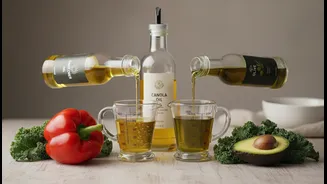
A central argument against seed oils is their high concentration of omega-6 polyunsaturated fats. It's true that modern diets often have a skewed ratio, with far more omega-6 than anti-inflammatory omega-3. However, the solution isn't to eliminate omega-6, which is an essential fatty acid, but to bring things back into balance. Rather than obsessing over the oil in your pan, focus on increasing omega-3s in your diet from sources like fatty fish, flaxseeds, and walnuts. Olive oil has a naturally balanced ratio of fatty acids. Using canola oil for high-heat cooking while also eating salmon twice a week is a more balanced approach than cooking everything in butter and avoiding all seed oils.
The Deal with Coconut Oil
Coconut oil holds a unique spot in the oil debate. Praised in some circles, it's viewed with caution by many health organizations. The reason is its high saturated fat content—over 80%. While it’s solid at room temperature and works well in vegan baking as a butter substitute, major health bodies like the American Heart Association recommend limiting saturated fat, as it can raise LDL ('bad') cholesterol. Some studies show it also raises HDL ('good') cholesterol, but the overall consensus is that it's not as heart-healthy as unsaturated plant oils like olive or canola oil. It can be part of a healthy diet, but it's best used in moderation rather than as your primary cooking fat.