







A More Natural Conversation
OpenAI's latest update, called GPT-Live, overhauls the voice experience in ChatGPT. It marks a significant leap from robotic text-to-speech to a fluid, conversational partner. The new technology is built on what's known as a full-duplex architecture,
which simply means it can listen and speak at the same time, much like a human. This allows for more natural interactions where you can interrupt, pause to think, and the AI can even offer small acknowledgements like 'mhmm' to show it's paying attention. This is a core part of a new model designed to make interacting with AI as easy as talking to another person, moving away from the stilted, turn-based conversations of older voice assistants.
The Strategic Spotlight on Hindi
Why the special attention on Hindi? The answer lies in India's immense strategic importance. With hundreds of millions of Hindi speakers, the country represents one of the largest and most dynamic markets for sophisticated AI services. By prioritising Hindi, OpenAI is making a clear statement: to win the global AI race, you must win in India. This move directly challenges competitors who have long invested in local language support. The recent GPT-Live-1.1 update specifically introduced two new Hindi voices, 'Neer' and 'Leher', as part of a broader push to make ChatGPT more accessible and useful for a massive user base that may not be fluent in English. OpenAI executives have noted that India is an 'audio-first' market where voice interaction is key.
How the Hindi Voice Works
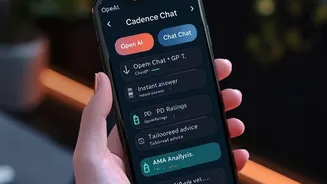
Activating the new feature is designed to be straightforward. Within the ChatGPT app, users can tap the voice icon to start a conversation. With the new Hindi voices, you can speak to the AI in Hindi, asking it to draft an email, tell a story, or explain a complex topic. The system is being trained to handle not just pure Hindi but also 'Hinglish', the common and fluid mix of Hindi and English used in everyday conversation across India. This capability is crucial for a truly natural experience. OpenAI's India-based leadership has stated that accommodating users who prefer speaking to typing is a major focus, reflecting the communication patterns of a broader Indian audience.
The Catch: 'Varying Availability'
Before you rush to try it, here is the crucial caveat. The headline’s mention of 'varying regional availability' is important. OpenAI has confirmed that new features like the GPT_Live_1.1 update are rolled out in phases. While the new Hindi voices started becoming available in mid_October 2026, it may not appear for all users at the same time. This staggered approach is common for major tech releases, allowing companies to manage server load and gather feedback before a full public launch. Users should ensure their app is updated and check for the new voice options within the settings, but patience may be required as the rollout continues across different devices and account types.
Beyond Hindi: The Road Ahead
The focus on Hindi naturally raises questions for speakers of India's other major languages. While the latest named voices are for Hindi, OpenAI has stated that a 'real big focus is on Hindi and vernacular' languages in general. The company has acknowledged that to be truly accessible in India, it needs to look beyond English. Earlier models in 2026 showed improved support for languages like Tamil, Telugu, and Marathi. The successful implementation and refinement of the Hindi model will likely serve as a blueprint for future integrations. This signals a long term strategy geared towards global expansion, where supporting India's linguistic diversity is a cornerstone for growth.