





A Simpler, Leaner Process
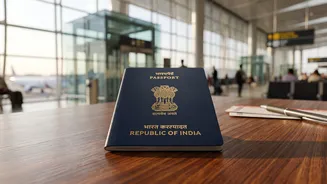
In a move to make the country more accessible, India's Ministry of Home Affairs has reduced the main visa categories from 13 to nine, and the number of sub-categories from 49 to 23. This major overhaul is designed to eliminate confusing overlaps and make it
more straightforward for applicants to select the correct visa for their purpose of travel. Beyond just restructuring categories, the application forms themselves have been simplified, with the number of required fields cut by as much as 70%. This change aims to reduce the time and effort needed to apply, while also improving administrative efficiency. The new system is expected to be fully operational by the end of 2026, following necessary IT system upgrades.
Visitor Visa: Beyond Tourism
One of the most significant changes is the rebranding of the 'Tourist Visa' to the more comprehensive 'Visitor Visa'. This reflects a broader scope of permitted activities. The category is now split into two sub-types. The V-1 visa is designed for short-term visits of up to 30 days with multiple entries, covering activities like tourism, wellness retreats, brief medical consultations, short courses in arts or music, and even casual business meetings. For those planning longer or repeat trips, the V-2 visa offers validity of one, five, or ten years, covering all activities under V-1 plus specialised pursuits like mountaineering.
Business Visa: Clearer Lanes for Commerce
The Business Visa has been reorganised into two distinct streams to provide greater clarity for different commercial activities. The B-1 visa is for long-term, licence-based business, such as establishing an industrial or business venture in India. The B-2 visa caters to shortterm, contractnded work, including attending conferences, participating in sporting events, film production, and other performance arts. A specific provision has also been created for foreign specialists, engineers, and technical personnel engaged by Indian companies for roles like installation, quality checks, and training.
Student and Medical Visas: Supporting 'Study in India' and 'Heal in India'
In line with national initiatives, visa categories for students and medical travellers have also been refined. The Student Visa is now consolidated into two subcategories : S - 1 for formal school and university education , and S - 2 for research scholars , PhD candidates , visiting faculty , and interns . The Medical Visa framework maintains separate provisions for those seeking conventional medical treatment ( M - 1 ) and those pursuing treatment under India ' s traditional AYUSH systems ( M - 3 ) . These visas will typically be granted for one year with multiple entries to accommodate extended treatment plans . Dedicated attendant visas ( M - 2 and M - 4 ) are also available for family members .
The Other Core Categories
The remaining five core visa categories round out the new , simplified framework . These are the Diplomatic , Official , and Journalist visas , which serve specific governmental and media functions . The Work Visa is for highly skilled professionals taking up employment in India . Finally , a ' Miscellaneous ' visa category has been retained to cover specific cases not addressed elsewhere , such as for certain persons of Indian origin , their families , and dependents of long - term visa holders . This consolidation brings India ' s visa regime more in line with global standards and is intended to foster greater economic and cultural cooperation .