





Embrace Bodyweight Basics
Your own body is the most versatile piece of gym equipment you own, and it requires zero floor space to store. Bodyweight exercises are the foundation of small-space fitness. Movements like push-ups, squats, lunges, and planks are highly effective and can
be done in an area the size of a yoga mat. These exercises are functional, meaning they mimic everyday movements and build practical strength. To increase intensity without needing more space, you can slow down the movement, add more repetitions, or reduce rest time. For example, mastering push-up variations—from incline push-ups against a wall to full floor push-ups—provides a progressive challenge for your entire upper body.
Focus on Compound Movements
When space and time are limited, efficiency is key. Compound exercises are movements that work multiple muscle groups simultaneously. Think squats, lunges, push-ups, and burpees. A squat, for instance, engages your quads, hamstrings, glutes, and core all at once. By focusing on these types of exercises, you get a full-body workout in less time and with fewer movements, maximizing your results without needing to move around a lot. This approach builds functional strength and burns more calories compared to isolation exercises that target only one muscle at a time.
Adopt High-Intensity Interval Training (HIIT)
HIIT is a game-changer for small-space workouts. This training method involves short bursts of intense, all-out effort followed by brief recovery periods. A typical HIIT session might involve 40 seconds of an exercise like jump squats or mountain climbers, followed by 20 seconds of rest, repeated with different exercises. These workouts are incredibly efficient, often lasting only 15-20 minutes, and they can significantly boost your cardiovascular health and calorie burn. Because HIIT focuses on intensity over duration, you don't need a large area to get your heart rate up and achieve a powerful workout.
Invest in Smart, Compact Gear
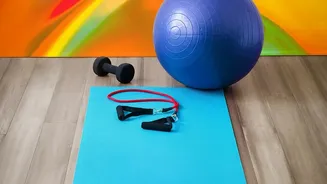
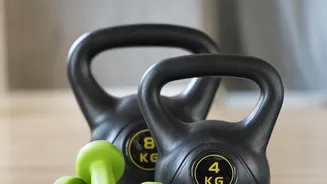
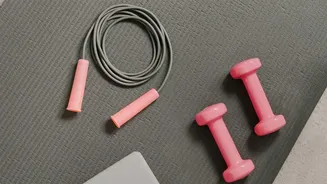
While not essential, a few carefully chosen pieces of equipment can drastically expand your workout options. Resistance bands are a top choice; they are inexpensive, take up almost no room, and can be used for a huge variety of strengthening exercises. Adjustable dumbbells are another great investment, as one pair can replace an entire rack of weights. A quality kettlebell allows for dynamic, full-body movements like swings, while sliders can make exercises like lunges and mountain climbers more challenging by forcing your core to work harder to stabilize your body. A doorway pull-up bar is also an excellent tool for building upper body strength without sacrificing floor space.
Utilise Your Vertical Space
When you can't build out, build up. Your walls and doors are valuable assets in a small workout area. Use a wall for support during exercises like wall sits, which are fantastic for building quad and core strength without any movement at all. You can also use the wall for incline or decline push-ups to change the difficulty. A sturdy doorframe can be fitted with a pull-up bar for a fantastic back and bicep workout. Thinking vertically opens up new exercise possibilities that don't require any additional floor space.
Create a Dedicated 'Workout Zone'
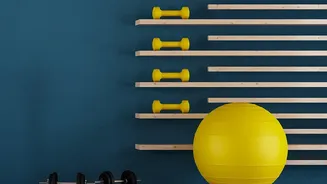
Psychologically, having a designated space for exercise can make a huge difference in your consistency. It doesn't need to be a separate room. It can be a small corner that is home to your yoga mat, resistance bands, and a whiteboard with your workout plan. The act of rolling out your mat can signal to your brain that it's time to work out, helping you switch from 'home mode' to 'fitness mode'. Keeping this space tidy and ready to go reduces friction and makes it easier to start your routine. When your workout is over, packing away your few items helps transition the space back to its primary function.