








Beyond the Carbon Footprint
The primary motivation behind this shift is undeniably environmental. Short-haul flights are notoriously carbon-intensive, and as awareness around the climate crisis grows, many travellers are rethinking their impact. For a generation fluent in the language
of sustainability, choosing a train over a one-hour flight is a tangible way to reduce their carbon footprint. While the concept of 'flight shaming' gained traction in Europe, the movement in Southeast Asia feels less about guilt and more about a positive choice. It’s a proactive decision to align travel habits with personal values. Instead of viewing a flight as a convenient shortcut, these backpackers see it as an environmental cost they are no longer willing to pay when a viable, and often more interesting, alternative exists.
Trading Time for Money and Experience
While budget airlines appear cheap, the final cost often tells a different story. Once you add baggage fees, expensive airport transfers, and the time spent in security lines, the savings can evaporate. Train travel, in contrast, often offers more straightforward pricing and delivers you to central, accessible stations. But the real trade-off is time for experience. A flight deletes the space between two points, turning the journey into a sterile, non-event. A train trip transforms that 'in-between' time into a core part of the adventure. What is lost in speed is gained in immersion. The hours spent on the rails aren't seen as a delay but as an opportunity to read, reflect, chat with fellow passengers, and watch the world go by at a human pace.
A Front-Row Seat to the Real Southeast Asia
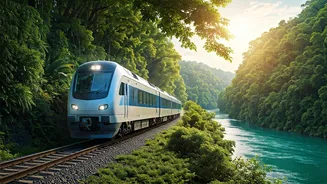
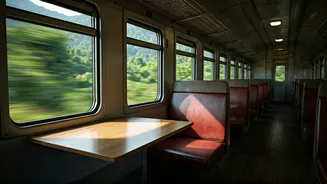
Perhaps the most compelling argument for train travel is the view from the window. It offers an unfiltered look at the country you’re exploring, a cinematic cross-section of daily life that you simply cannot get from 30,000 feet. On a train, you watch sprawling megacities dissolve into lush green rice paddies, witness remote villages come to life in the morning sun, and see children waving as the carriages roll past. It’s a sensory experience—the rhythm of the wheels on the track, the smell of street food sold at rural stations, and the friendly conversations struck up with local families sharing your carriage. This is the uncurated, authentic travel that many backpackers crave, turning the journey itself into a destination.
Iconic Journeys on the Rails
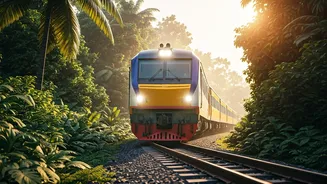
Southeast Asia is home to some truly epic train journeys that are becoming rites of passage for this new wave of travellers. In Vietnam, the 'Reunification Express' is a legendary route that snakes its way over 1,700 kilometres from Hanoi to Ho Chi Minh City, connecting the country’s past and present. In Thailand, the overnight sleeper train from Bangkok to Chiang Mai is a backpacker classic, offering a comfortable and social way to travel north while saving on a night's accommodation. Further south, the railway line that runs down the Malaysian peninsula to Singapore provides a fascinating glimpse into the region's colonial history and diverse landscapes, from dense jungle to modern cityscapes. These routes are no longer just a means of transport; they are integral experiences on the Southeast Asian trail.
It’s Not Always a Smooth Ride
Of course, embracing slow travel by rail requires a certain mindset. It’s essential to balance the romantic ideal with practical reality. Trains in Southeast Asia can be subject to delays, comfort levels vary wildly from modern carriages to more basic setups, and booking tickets can sometimes require a bit of patience, especially during peak seasons. This mode of travel demands flexibility and an acceptance that things may not always go according to a strict plan. But for those who embrace it, this is part of the charm. The unpredictability is an antidote to the over-scheduled, hyper-efficient itineraries of the past, forcing travellers to slow down, be present, and adapt—skills that are, after all, at the very heart of authentic travel.