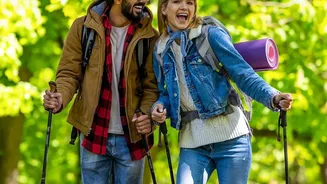







The Daily Grind of Solo Metrics
For many of us, the fitness journey begins with a number: 10,000 steps a day, 30 minutes of cardio, or a certain number of calories burned. While these metrics are useful, the solo pursuit of hitting them can quickly become monotonous. The initial burst
of motivation fades, and exercise starts to feel like another task on an endless to-do list. This is where many people fall off, not from a lack of desire for better health, but from the sheer boredom and isolation of the process. Walking alone, day after day, can feel more like a duty than a delight, making it difficult to maintain the habit long-term.
The Power of Social Accountability
This is where a walking group changes the game. The simple act of joining others introduces a powerful psychological principle: social accountability. Research consistently shows that people are far more likely to stick to their fitness goals when a partner or group is involved. When you know a group is expecting you, it creates a positive social obligation that's often more compelling than your own internal motivation, especially on days when you feel tired or uninspired. It's a subtle shift from 'I have to walk' to 'I get to walk with my friends'. This shared commitment makes consistency feel almost effortless. Studies have found that walking groups have high adherence rates, meaning people tend to stick with them.
More Than Just Physical Benefits
While walking is proven to improve a vast range of health metrics—from lowering blood pressure and cholesterol to strengthening bones and managing weight—the benefits of a group setting go much deeper. Participants in group walks often report significant boosts in mental and emotional well-being, including reduced stress and feelings of depression. The social connection itself is a powerful health intervention. It combats loneliness, provides a sense of community, and offers a support system. The conversations and camaraderie shared on the trail transform exercise into a fulfilling social activity, which is often what makes it 'deeply rewarding'.
Making Fitness Feel Natural
The 'natural' aspect described in the headline comes from how seamlessly the activity integrates into your life. Instead of carving out time for a workout you might dread, you're scheduling a pleasant social outing that happens to be great for your health. The focus shifts from the effort of the exercise to the enjoyment of the experience. Walking with a group can reduce the perceived effort of the activity, and the changing scenery and conversation provide a welcome distraction. Studies have shown that walking is a low-impact, accessible form of exercise that's gentle on the joints, making it suitable for almost everyone, and a group provides a structured, supportive environment to stay active.
How to Find Your Walking Tribe
Finding a walking group is easier than ever. In many Indian cities, communities form organically in local parks and residential complexes, especially during the pleasant morning and evening hours. A simple way to start is by frequenting a popular walking spot like Ulsoor Lake in Bengaluru or Lodhi Garden in Delhi and observing if regular groups exist. Additionally, online platforms and apps like Meetup host numerous walking and trekking groups for various fitness levels. You can also check local community centers, social media groups for your neighbourhood, or even start your own group with a few interested friends or neighbours. The key is to find a group whose pace and social dynamic feel right for you.