






The World's Smallest Penguin
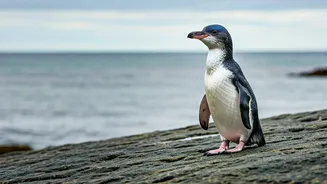
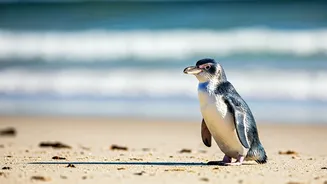
The captivating creature in question is the Little Penguin, known scientifically as Eudyptula minor, which translates to 'good little diver'. The headline's comparison is surprisingly accurate; while a standard bowling pin is about 38 centimetres tall,
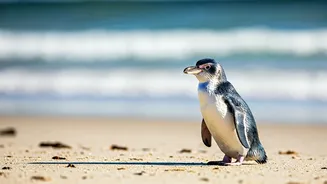
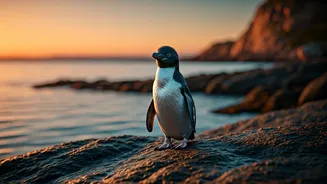
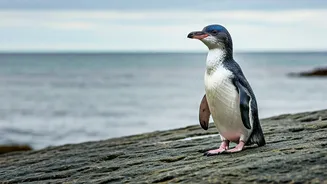
these penguins top out at around 25 to 35 centimetres and weigh just over one kilogram. In Australia, they are affectionately called Fairy Penguins, a nod to their diminutive size. In New Zealand, they are known by their Māori name, kororā. Their plumage isn't the classic black and white seen on larger species. Instead, they sport a distinctive slate-blue or indigo coat on their back, which provides excellent camouflage from predators above when they are swimming in the ocean. Their white belly blends with the bright surface of the water, hiding them from threats below.
A Strictly Nocturnal Life on Land
These penguins are coastal dwellers, making their homes in burrows along the shores of southern Australia and New Zealand. They are the only truly nocturnal penguin species when on land. After spending the day foraging for food at sea, they wait for the cover of darkness to return to their colonies. They gather in small groups called 'rafts' just offshore before waddling ashore together, a strategy that helps protect them from predators. Their colonies can be found in a variety of habitats, from sandy dunes and rocky crevices to coastal forests. In some urban areas, they have even adapted to nesting under houses and other man-made structures, their noisy calls becoming a familiar sound to coastal residents after sunset.
Dedicated Divers and Parents
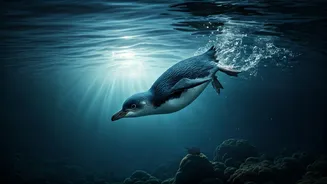
True to their name, Little Penguins are expert divers. Their torpedo-shaped bodies and powerful flippers allow them to 'fly' through the water, reaching speeds of up to 6 kilometres per hour. They hunt for small schooling fish like anchovies, as well as squid and crustaceans. They can undertake hundreds of dives a day, typically to depths of 10-20 metres. During the breeding season, which generally runs from June to October, they form monogamous pairs. Both parents share the duties of incubating the one or two eggs and caring for the chicks. For the first few weeks, one parent guards the nest while the other forages, and then they swap roles. This teamwork is essential to successfully raise their young.
Survival in a World of Giants
Being small comes with significant challenges. At sea, Little Penguins are prey for sharks and seals. On land, the threats are just as serious, and often human-related. Introduced predators such as dogs, cats, foxes, and ferrets have had a devastating impact on many colonies. In fact, uncontrolled dogs are considered one of the greatest threats to their populations. Urbanisation and coastal development lead to habitat loss, while road traffic and plastic pollution present further dangers. Oil spills are another grave threat, as the penguins' small size and coastal habits make them particularly vulnerable.
Conservation and Coexistence
Globally, the Little Penguin is classified as a species of 'Least Concern' by the IUCN, with a stable overall population. However, many local populations, particularly on the mainland, are declining and considered at risk. This has spurred numerous conservation efforts. In places like Phillip Island in Victoria, Australia, extensive programs have been established to protect the massive colony of around 40,000 breeding penguins. These initiatives include predator control, habitat restoration, and building penguin-friendly infrastructure like underpasses to help them cross roads safely. On New Zealand's Middle Island, trained Maremma sheepdogs have been successfully used to protect a colony from fox attacks, a story so unique it was turned into a film. These efforts highlight a growing understanding of the importance of coexisting with and protecting these remarkable little birds.