



The Essence of Cat-Cow
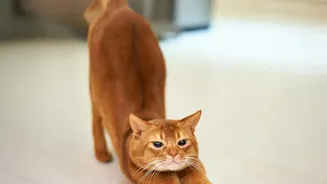
Cat-Cow, or Marjaryasana-Bitilasana, is not one static pose but a dynamic sequence flowing between two shapes. Starting on your hands and knees in a 'tabletop' position, you rhythmically alternate between arching your back like a cow (Bitilasana) and rounding
it like a cat (Marjaryasana). This movement is synchronized with your breath, typically inhaling into Cow Pose and exhaling into Cat Pose. It’s a foundational warm-up in many yoga classes and a staple in physical therapy because it gently mobilizes the entire spine, from your tailbone to your neck.
Why a 'Small, Comfortable Range' Is Key
The goal of Cat-Cow is not to push your spine to its absolute limit. Instead, the greatest benefits come from moving within a small, comfortable range. Forcing a deep arch or an extreme curve can strain the neck and lower back. A gentle, controlled motion builds body awareness, improves circulation to the discs in your spine, and safely increases flexibility over time. This mindful approach allows the muscles along the back, abdomen, and neck to stretch and release tension without risk of injury. Think of it as waking your spine up, not forcing it into a shape. Starting small allows you to notice how your body feels; if the movement feels good, you can gradually explore a larger range.
Your Step-by-Step Guide to Safe Practice
To perform Cat-Cow correctly, start by setting up your foundation. Position yourself on all fours, with your hands directly under your shoulders and your knees directly under your hips, about hip-width apart. Your spine should be in a neutral, relaxed line. 1. Inhale into Cow Pose: Slowly begin to drop your belly toward the floor. Lift your chest and tailbone toward the ceiling, creating a gentle arch in your back. Allow your gaze to lift forward, but avoid cranking your head back; keep your neck long as a natural extension of your spine. 2. Exhale into Cat Pose: Press the floor away with your hands and begin to round your spine toward the ceiling. Tuck your tailbone under and gently draw your chin toward your chest without forcing it. Feel the stretch between your shoulder blades. 3. Flow with Breath: Continue flowing between these two poses for 5 to 10 full rounds of breath, which should take about a minute. The movement should be slow, smooth, and continuous.
Common Mistakes and How to Fix Them
Even simple poses have common pitfalls. In Cat-Cow, a frequent error is moving too quickly and disconnecting from the breath. The movement should be deliberate. Another mistake is collapsing into the shoulders or crunching the neck when looking up in Cow Pose. To fix this, keep your shoulders drawn away from your ears and your neck long. Also, ensure your hips stay aligned over your knees, rather than shifting forward or backward, to maintain stability and proper form. Finally, avoid locking your elbows; a micro-bend keeps the joints safe and the muscles engaged.
Modifications for Every Body
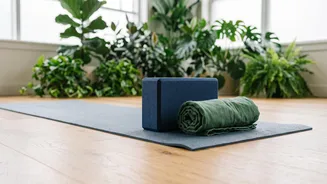
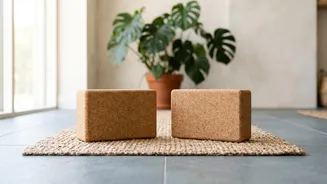
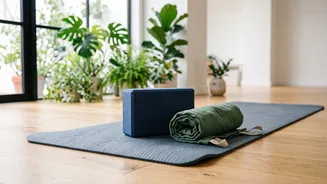
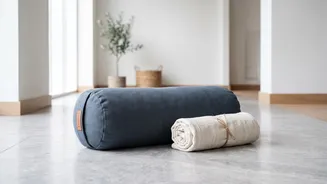
Cat-Cow is wonderfully adaptable. If you experience wrist pain, you don't have to skip it. Try performing the pose on your forearms instead of your hands. You can also make fists and rest on your knuckles to keep the wrists straight, or place yoga blocks under your hands to reduce the angle of extension. For sensitive knees, simply place a folded blanket or towel underneath them for extra cushioning. The entire sequence can also be done while seated in a chair, making it an accessible stretch you can do at the office. Simply place your hands on your knees and move your spine through the same arching and rounding motions.