



An Ambitious Journey to the Asteroid Belt
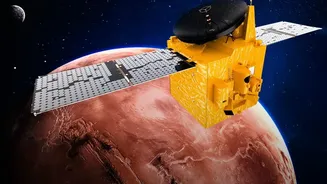
The United Arab Emirates (UAE) has set its sights on deep space with the Emirates Mission to the Asteroid Belt (EMA), an ambitious project scheduled for launch in March 2028. The mission, powered by a spacecraft named the MBR Explorer, will embark on an incredible
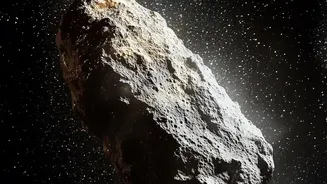
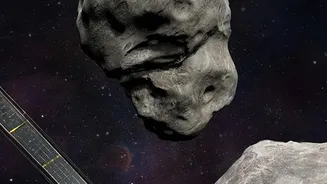
five-billion-kilometre journey that will take it through the orbits of Venus, Earth, and Mars. Its primary objective is to study seven different asteroids in the main belt, gathering data that could unlock secrets about the formation of our Solar System. The mission's grand finale involves the MBR Explorer autonomously deploying a smaller probe to land on the surface of its final target, the asteroid 269 Justitia. This complex, multi-year voyage represents a significant undertaking in planetary science and exploration, and at its heart lies a critical contribution from Indian innovation.
The Indian Startup Powering the Spacecraft
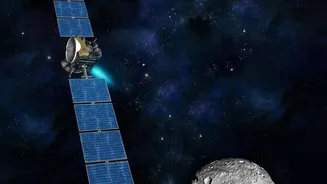
The company entrusted with a vital part of this mission is HEX20, a space technology startup founded in 2020 and based in Thiruvananthapuram. While many companies contribute to space missions, HEX20's role is not peripheral; they have been selected by the UAE Space Agency to develop the spacecraft's core systems. This includes designing and building the spacecraft bus—the fundamental structure of the MBR Explorer—along with its sophisticated onboard computer, power management systems, and the critical software that will guide its long journey. For a young Indian company to be chosen for a core developmental role in another nation's flagship deep-space mission is a monumental achievement, showcasing the high level of trust and technical expertise emerging from India's private sector.
Explainer: What is a Spacecraft Bus?
Think of a spacecraft as having two main parts: the payload and the bus. The payload consists of the scientific instruments—the cameras, sensors, and analysers that perform the actual mission. The spacecraft bus, on the other hand, is everything else. It is the chassis, the engine, the fuel tank, the electrical system, and the brain all rolled into one. The bus provides the physical structure that holds everything together, generates and distributes power (usually from solar panels), controls the spacecraft's temperature, communicates with Earth, and houses the propulsion systems needed to navigate through space. In essence, the bus is the workhorse platform that ensures the precious scientific instruments are delivered to their destination and are able to function correctly. By developing the bus for the MBR Explorer, HEX20 is responsible for the very survival and operation of the entire spacecraft.
A Landmark for India's Private Space Sector
This collaboration is more than just a single contract; it's a powerful signal of India's arrival as a key player in the global space economy. For decades, the Indian Space Research Organisation (ISRO) has been the nation's standard-bearer in space. In recent years, the government has actively worked to open the sector to private enterprise through bodies like the Indian National Space Promotion and Authorization Centre (IN-SPACe). The goal is to foster a vibrant ecosystem where private companies can innovate, manufacture, and even lead missions, transforming India from a space-faring nation into a global space-industry hub. HEX20’s success with the UAE mission is a prime example of this policy in action. It demonstrates that Indian startups can compete and win major international contracts for complex deep-space missions, a domain previously reserved for large government agencies or established aerospace giants.