

The Foundation of Flavor
Before diving into specific regions, it's helpful to understand the building blocks of many Indian bean dishes, known as 'dal' when made with lentils or pulses. The foundation is often a flavour base of aromatics like onion, ginger, and garlic sautéed
in ghee (clarified butter) or oil. Spices are what create the distinct regional character. Rather than just stirring in a generic powder, many Indian recipes use a technique called 'tadka' or 'tempering', where whole spices like cumin seeds, mustard seeds, and dried chillies are sizzled in hot fat at the end of cooking and poured over the dish. This technique blooms the spices, releasing a powerful aroma and complex flavour that transforms the entire meal.
North India's Hearty Embrace: Rajma Chawal
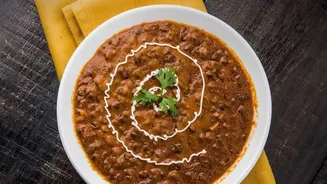
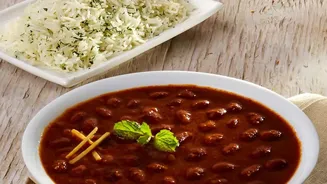
Travel to the northern state of Punjab, and you’ll find Rajma Chawal, a beloved comfort food. This dish features red kidney beans in a rich, creamy, and deeply spiced tomato-onion gravy. The flavour is robust and warming, perfect for a satisfying meal. The key to its signature taste lies in a base of sautéed onions, ginger, and garlic, followed by puréed tomatoes and a blend of ground spices like coriander, turmeric, and the all-important garam masala. This spice mix, often featuring cinnamon, cloves, and cardamom, gives the dish its characteristic warmth. The rajma is typically slow-cooked until perfectly tender, allowing it to absorb all the flavours of the gravy. Served with fluffy basmati rice, it's a complete meal that feels like a hug in a bowl.
South India's Tangy Delight: Sambar Sadam
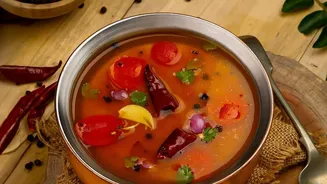
Journey south to Tamil Nadu for a completely different expression of beans and rice: Sambar Sadam. This is a one-pot meal where rice and lentils (typically toor dal or split pigeon peas) are cooked together with a medley of vegetables into a soupy, porridge-like consistency. What makes it truly special is the sambar masala and tamarind. Sambar powder is a fragrant blend of roasted lentils and spices, while tamarind pulp provides a signature tangy and sour note that cuts through the richness. The final flourish is a tempering of mustard seeds, curry leaves, and dried red chillies sizzled in ghee or oil. This adds a final layer of aroma and texture, making every spoonful a complex burst of tangy, spicy, and savory notes.
East India's Comfort Classic: Bengali Khichuri
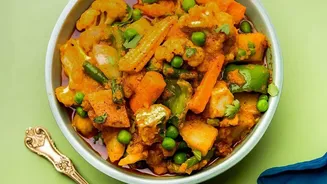
In Bengal and across much of Eastern India, Khichuri (also known as Khichdi) is the ultimate comfort food, often associated with rainy days or easy family meals. At its simplest, it's a one-pot dish of rice and lentils, most commonly roasted moong dal, which imparts a nutty flavour. It can be prepared with a loose, porridge-like consistency or a firmer, pilaf-style texture. The flavouring is often subtle and aromatic, built on a foundation of ghee, bay leaves, cinnamon, and cardamom. While a simple khichuri is delicious on its own, it's often elevated with seasonal vegetables like potatoes, cauliflower, and green peas, making it a wholesome and complete meal. It’s a testament to how simple ingredients, cooked with care, can be profoundly satisfying.