



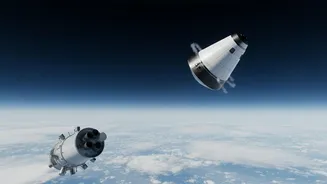

India's Giant Leap
The Gaganyaan mission is India’s ambitious endeavour to send a crew of three astronauts into a 400-kilometre orbit for a three-day mission and bring them back safely to Earth. A successful mission will place India in an elite club of nations—alongside
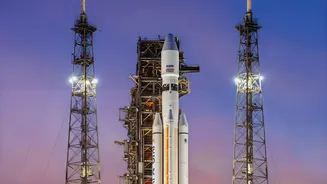
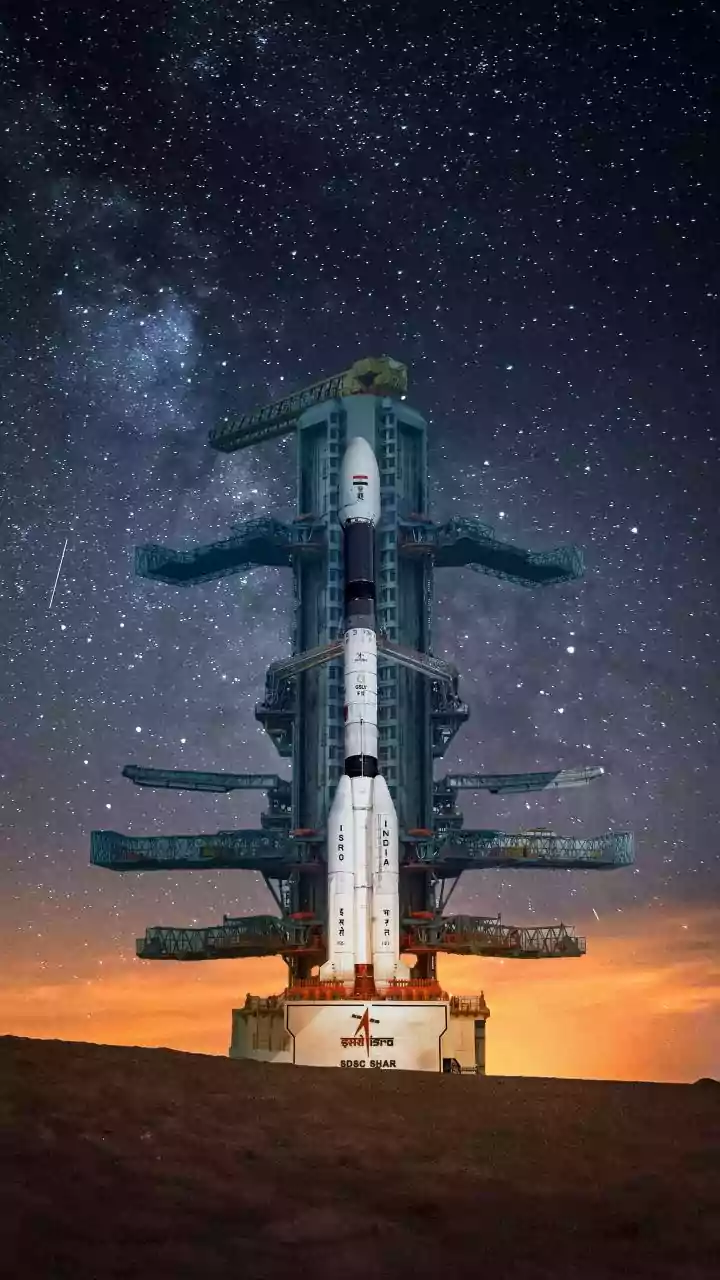
the US, Russia, and China—with independent human spaceflight capabilities. This is more than just a technological demonstration; it's a statement of national ambition, designed to boost science and technology across the country and inspire a new generation. The vehicle for this journey is the human-rated LVM3 rocket, a powerful and modified version of ISRO's reliable launch vehicle, which will carry the Orbital Module containing the astronauts.
The Ultimate Insurance Policy
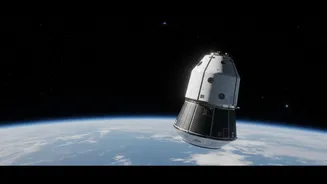
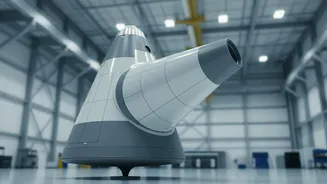
In human spaceflight, nothing is more important than astronaut safety. The most dangerous phase of any mission is the launch, when the rocket is a controlled explosion propelling a capsule at immense speeds. If anything goes wrong, the astronauts need a way out, fast. This is where the Crew Escape System (CES) comes in. Think of it like a highly advanced ejection seat, but for an entire space capsule. The system is designed to detect a critical failure on the launchpad or during ascent, fire powerful, quick-acting solid motors, and pull the crew module away from the malfunctioning rocket to safety. The astronauts would then parachute down to a safe landing. Without a proven escape system, a human mission cannot proceed.
Simulating a High-Stakes Failure
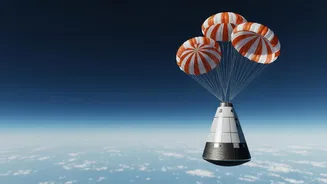
To ensure the Crew Escape System works flawlessly, ISRO has been conducting a series of rigorous tests simulating different failure scenarios. A key milestone was the high-altitude abort test, known as the Test Vehicle Abort Mission-1 (TV-D1). In this test, a special single-stage liquid rocket launched an uncrewed crew module to an altitude of around 17 kilometres, reaching a speed faster than sound (Mach 1.2). At that precise point, the abort sequence was intentionally triggered. The escape system fired, pulling the capsule clear of the rocket. The crew module then began its descent, deploying a series of parachutes to slow down before splashing safely into the Bay of Bengal, where it was recovered by the Indian Navy. This test successfully demonstrated that the escape system could function perfectly during the critical phase of atmospheric ascent.
Testing Every Possibility
The high-altitude test is just one piece of a larger safety puzzle. ISRO has been methodically testing every phase of a potential abort. In 2018, the agency conducted a Pad Abort Test (PAT), which proved the escape system could work even before liftoff, pulling the crew module away from the launchpad in an emergency. More recently, a series of Integrated Air Drop Tests (IADT) have been performed. In these tests, a simulated crew module is dropped from a Chinook helicopter to validate the performance of the complex parachute system. This system uses multiple parachutes—including drogue and main chutes—to slow the capsule from high speeds to a gentle splashdown velocity. By repeatedly testing these systems under different conditions, ISRO is building confidence that every component will perform reliably when human lives are on the line.