








The Trouble with Cotton
Cotton is a beloved natural fibre, known for its softness and breathability in dry weather. However, its greatest strength becomes its biggest weakness in the rain: its absorbency. Cotton is hydrophilic, meaning it loves water. In fact, a cotton garment
can absorb up to 27 times its own weight in moisture. When you get caught in a shower, your cotton clothes act like a sponge, soaking up rain and holding it directly against your skin. This not only makes the garment incredibly heavy and uncomfortable but also eliminates its insulating properties, as wet cotton pulls heat away from your body. This is why outdoor enthusiasts have a famous saying: "cotton kills." While the risk in a warm Indian monsoon is less about hypothermia and more about sheer discomfort, the core problem remains.
The Science of Drying
Once soaked, cotton takes a very long time to dry, especially in the high humidity that accompanies monsoon season. The water trapped within the dense cellulose fibres has to evaporate, a slow process when the air is already saturated with moisture. A wet cotton shirt can remain damp for hours, leading to chafing, a clammy feeling, and even providing a breeding ground for mildew and odour-causing bacteria. This prolonged dampness is the primary reason why pure cotton is often considered one of the worst choices for rainy weather, despite its comfort when dry.
Enter Quick-Dry Synthetics
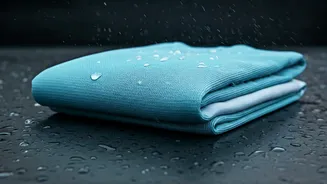
This is where quick-dry fabrics, typically made from synthetic materials like polyester and nylon, shine. These fabrics are fundamentally different from cotton because they are hydrophobic—they repel water instead of absorbing it. A polyester shirt, for example, absorbs only about 0.4% of its weight in water. Instead of soaking up moisture, these fabrics work by wicking it. This process pulls sweat or rain away from your skin and spreads it across the fabric's surface, where it can evaporate much more quickly. This keeps you feeling significantly drier and more comfortable, even if you get caught in a storm.
The Clear Advantage in a Downpour
When you directly compare the two, the verdict for rainy weather is clear. A polyester garment can dry in a fraction of the time it takes for a similar cotton one. While a cotton tee might take hours to dry, a quick-dry shirt can be wearable again in under an hour, sometimes even minutes, depending on airflow. This is a massive advantage during the monsoon, whether you're commuting to work or travelling. Quick-dry clothes remain lightweight when wet and don't cling to the body in the same uncomfortable way cotton does. For anyone active outdoors or simply trying to navigate a rainy city, synthetic fabrics offer superior performance by keeping you drier, warmer, and more comfortable.
Are There Any Exceptions?
While synthetics are the clear winner, it's not always a completely one-sided fight. For very light drizzles or if you know you'll be indoors moments after getting wet, the breathability of cotton might still be comfortable. Some people also dislike the feel of synthetics against their skin and find them less breathable in hot, dry conditions. Synthetics can also be more prone to retaining odours from sweat compared to cotton, though many modern performance fabrics are treated with antimicrobial finishes to combat this. Another option is to look for cotton-polyester blends, which aim to offer the best of both worlds: some of cotton's softness and breathability combined with the moisture-wicking and fast-drying properties of polyester.