



Build Your Foundation From the Feet Up
Balance begins with your base. Stand with your feet either together or hip-width apart, whichever feels more stable for you. Actively press down through all four corners of both feet: the ball of the big toe, the ball of the little toe, and both sides
of your heel. Lift and spread your toes to feel the connection to the mat, then gently lower them. This simple action awakens the muscles in your feet and creates a solid, grounded foundation, much like the roots of a mountain anchoring it to the earth. Your weight should be distributed evenly, preventing you from leaning forward or backward.
Engage Your Legs and Core for Stability
To prevent locking your knees, which can strain the joints, maintain a micro-bend in them. Gently engage your thigh muscles (quadriceps) as if you are lifting your kneecaps. From there, focus on your core. Draw your belly button gently in and up, as if you're zipping up a snug pair of trousers. This light core engagement is crucial for stability and helps to lengthen your lower back. Your pelvis should be in a neutral position, with your tailbone lengthening toward the floor, which helps prevent an over-arched back.
Align Your Spine and Open Your Chest
With your foundation set, stack your joints. Your hips should be over your ankles and your shoulders over your hips. Roll your shoulders up, back, and then down, allowing them to relax away from your ears. This action opens the chest and helps correct a slumping posture. Let your arms hang naturally by your sides, with your palms facing forward to encourage this openness. Keep your chin parallel to the floor and lengthen the back of your neck by imagining the crown of your head is being gently pulled toward the ceiling. This creates a feeling of being both grounded and lifted simultaneously.
The Power of Conscious Breathing
Your breath is the anchor for your mind and a tool for stability. Instead of shallow chest breathing, focus on deep, even breaths that originate from your diaphragm. Place a hand on your belly and feel it expand as you inhale and gently contract as you exhale. This slow, intentional breathing activates the parasympathetic nervous system, which helps to calm the mind and reduce stress. Avoid the common mistake of holding your breath, which creates tension and instability. Let your breath be smooth and continuous.
Syncing Breath with Alignment
Now, coordinate your breath with your alignment. Use your inhalation as an opportunity to lengthen. As you breathe in, feel your spine grow taller and the crown of your head lift higher. Use your exhalation to ground yourself further. As you breathe out, feel your feet root more firmly into the mat and soften any unnecessary tension in your shoulders or jaw. You can think of it this way: inhale to lengthen, exhale to stabilise. This rhythmic coordination of breath and subtle physical adjustment transforms the pose from static to dynamic.
Bringing It All Together
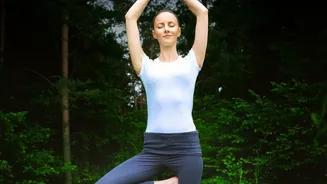
Once you have established the pose, soften your gaze on a fixed point in front of you to aid your balance. Hold the pose for anywhere from 30 seconds to a full minute, focusing on the continuous flow of your breath and the feeling of being strong and steady. With each practice, you'll improve your body awareness, posture, and balance. The pose is not about rigid perfection but about cultivating a state of active stillness, where your body is engaged and your mind is calm and present.