
The Problem with Pre-Packaged Meals
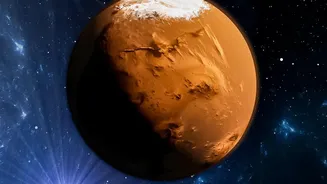
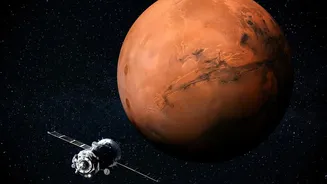
The primary challenge for a multi-year Mars mission is the sheer mass of food required. Every kilogram launched into space costs an immense amount of money and fuel. Packing years' worth of food for a crew is logistically daunting and economically impractical.
Beyond the weight, there's the problem of nutritional degradation. Studies show that pre-packaged space food, despite being shelf-stable, loses vital nutrients over time. Vitamins like A, C, B1, and B6 degrade significantly, with some falling to inadequate levels after just one to three years. This could lead to malnutrition and compromise astronaut health on a mission where peak physical condition is essential. Current space food systems have a reliable shelf life of about 18 months, far short of the five years that might be required for a round-trip Mars journey where food might be prepositioned years in advance.
More Than Just Calories
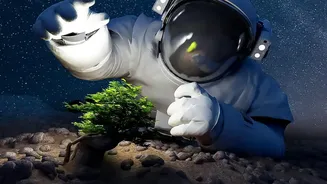
Food is not just fuel; it's a critical component of psychological well-being. Astronauts on the International Space Station (ISS) have reported significant morale boosts from the simple act of tending to and eating fresh produce. The sensory experience—the smell, texture, and taste of fresh food—provides a vital connection to Earth and a break from the monotony of a sterile environment and repetitive packaged meals. This phenomenon, known as 'menu fatigue', can lead to reduced appetite, weight loss, and nutritional deficiencies, posing a serious risk on a long-duration mission where there are no resupply options. The psychological benefits of gardening and eating fresh food are now considered a key countermeasure to the stress and isolation of spaceflight.
The Solution: A Martian Garden
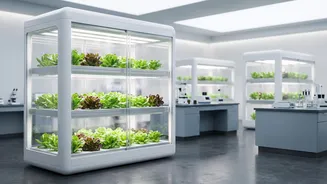
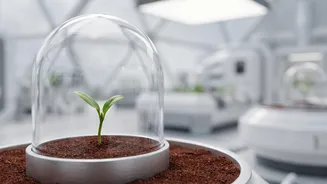
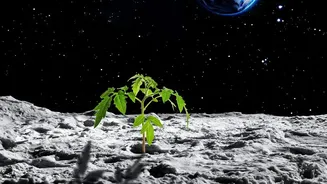
The consensus among space agencies like NASA is that for long-term survival, astronauts must grow their own food. This concept, known as in-situ resource utilization (ISRU), involves using local resources to become self-sufficient. The goal is to create a bioregenerative food system, where plants provide food and oxygen while recycling waste and water. Experiments on the ISS, such as the 'Veggie' program, have already demonstrated that plants like lettuce can be successfully grown and safely consumed in microgravity, providing crucial data and a welcome dietary supplement for crews.
The Challenges of Farming on Mars
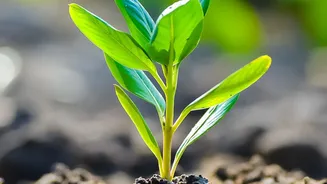
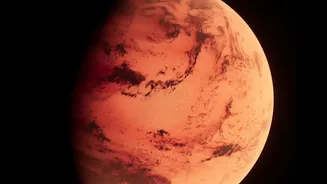
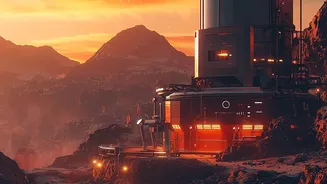
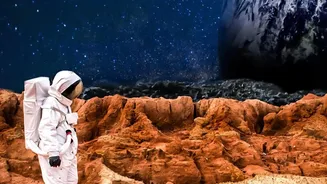
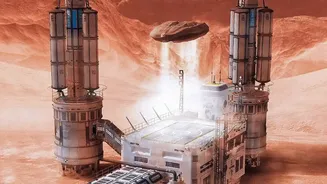
Growing food on Mars will be far more complex than planting a few seeds in the ground. The Martian environment is incredibly harsh, with a thin carbon dioxide atmosphere, freezing temperatures, and intense radiation. Any farming will need to take place within pressurized and heated greenhouses. Martian soil, or regolith, also poses significant hurdles. It lacks the organic matter and microbes that make Earth's soil fertile and contains toxic perchlorates that must be removed before it can be used for agriculture. Scientists are experimenting with various techniques to make the regolith viable, including washing out the toxins and introducing beneficial microbes to improve soil quality. Researchers are also focused on which crops are most efficient, considering factors like growth rate, water usage, and how much of the plant is edible.
Building the Menu for Mars
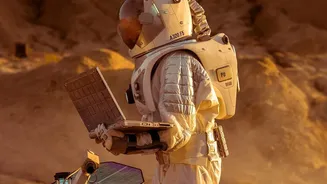
The future Martian diet will likely be a hybrid system. It will combine a foundation of long-lasting, pre-packaged foods from Earth with freshly harvested crops grown on-site. The focus is on robust and efficient crops like leafy greens, tomatoes, peas, and potatoes. To meet all nutritional needs, especially protein, scientists are also exploring innovative solutions like creating microbial-based nutrients, insect farming, and even 3D-printing food. NASA's Deep Space Food Challenge is actively seeking novel technologies to create complete, safe, and palatable food systems that require minimal resources and produce little waste. Ultimately, solving the food problem is as fundamental to reaching Mars as building the rocket itself. It marks the difference between a brief visit and establishing a sustainable human presence on another world.