
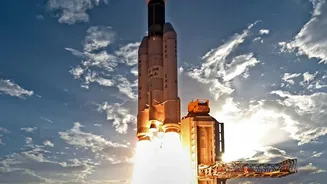
Beyond Rockets: What is the Space Economy?
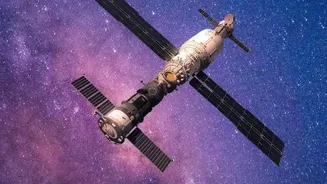
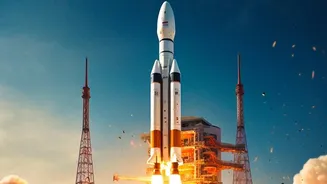
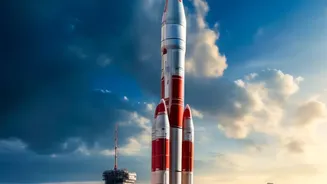
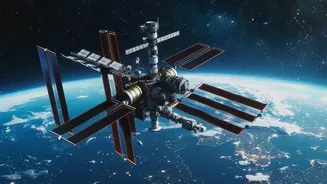
When you hear 'space economy,' it's easy to picture astronauts and massive rockets. While that’s part of it, the reality is far broader and more accessible. The space economy encompasses any commercial activity involving space. This includes manufacturing
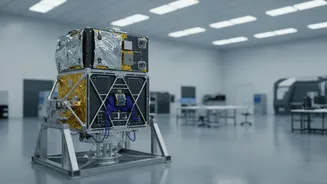
satellites and their components, providing launch services, and, perhaps most importantly, using the data these satellites generate. Think about it: the GPS that guides your cab, the satellite television you watch, and the weather forecasts that predict cyclones all rely on space infrastructure. The growth lies in companies building smaller, more efficient satellites, the startups creating rockets to launch them, and the tech firms analysing satellite imagery to help farmers increase crop yields or monitor climate change. This entire ecosystem, from manufacturing to data analytics, is what makes up the booming space economy.
India's Moment: A Policy-Powered Lift-Off
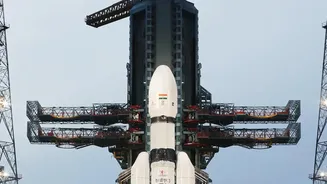
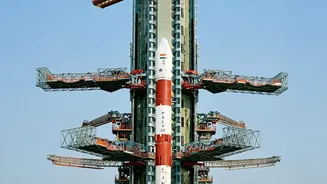
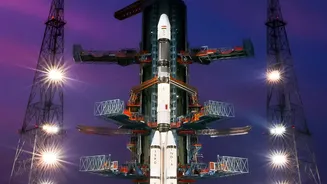
For decades, India's space programme was the domain of the Indian Space Research Organisation (ISRO). But landmark policy reforms in 2020 opened the final frontier to private companies. The government established IN-SPACe (Indian National Space Promotion and Authorisation Centre) as a single-window agency to guide and authorise private players, allowing them to use ISRO's world-class facilities. This single move has been a game-changer. The number of Indian space startups has surged from just a handful a few years ago to over 400 today. As a result, India's space economy, currently valued at around $8-9 billion, is projected to skyrocket to over $40 billion in the next decade. This isn't just a forecast; it's a strategic national goal, fueled by private innovation and a can-do spirit.
The New Constellation of Careers
The most exciting part of this expansion is the explosion of diverse job roles, many of which don't require you to be a rocket scientist. While aerospace engineers are certainly in demand, private companies like Skyroot Aerospace, Agnikul Cosmos, and Pixxel are also hiring for a wide range of other specialisations. There is a massive need for software developers with skills in Python, C++, and embedded systems to write the code that runs satellites and ground stations. Data scientists and analysts are needed to interpret the terabytes of information sent back from Earth observation satellites. The sector is also creating jobs in robotics, AI, mission control, and systems integration. Furthermore, as these startups grow into global companies, they require professionals in finance, marketing, supply chain management, and even space law to navigate complex international regulations.
Building the Skills for Your Space Future
So, how can a young Indian prepare for a career in this dynamic field? A strong foundation in STEM—science, technology, engineering, and mathematics—remains the most direct path. Degrees in aerospace, mechanical, electrical, and computer science engineering are highly sought after. Specialised institutions like the Indian Institute of Space Science and Technology (IIST) offer a direct pipeline to the sector, but graduates from IITs and NITs are also being actively recruited by private firms. However, technical skills alone are not enough. The industry values problem-solving, critical thinking, and the ability to work in multidisciplinary teams. For those in non-tech fields, gaining domain knowledge about the space industry can provide a significant advantage. The rise of private enterprise means that business acumen is just as crucial as technical expertise for the sector's long-term success.