




Your Pocket Planetarium
The first step to becoming an urban astronomer is downloading the right app. Think of it as a dynamic map of the universe that uses your phone’s location and sensors to show you exactly what’s overhead. For beginners, apps like Star Walk 2 and SkyView
Lite are fantastic choices, offering user-friendly interfaces and augmented reality (AR) overlays. Simply point your phone at the sky, and the app will identify stars, constellations, and planets. Another powerful and highly-regarded option is Stellarium Mobile, which provides a realistic and detailed view of the night sky. Most of these apps have excellent free versions that are more than capable of helping you find bright planets like Jupiter and Saturn.
Getting Started: Setup and Calibration
Before you head out, take a moment to set up your app. Ensure your phone’s location services are enabled so the app knows where you are. You may also need to calibrate your phone’s compass by moving it in a figure-eight pattern; the app will usually prompt you if this is needed. Spend a few minutes indoors familiarizing yourself with the interface. Learn how to search for an object—most apps have a search bar where you can type in "Jupiter" or "Saturn." This will typically place an arrow on your screen, guiding you to the planet's current position in the sky. Also, find the night mode setting, which often uses a red-light interface to help preserve your night vision once you’re outside in the dark.
Embrace the Urban Stargazing Challenge
City light pollution is the biggest hurdle for stargazers, but it doesn't make planet-spotting impossible. The key is to find the darkest possible spot available to you. This could be a local park, a rooftop with an unobstructed view, or even a backyard shielded from direct streetlights. Once you're there, give your eyes at least 15 minutes to adjust to the darkness. During this time, resist the urge to look at your bright phone screen. The brighter planets, like Jupiter and Saturn, are often powerful enough to cut through the hazy city glow. They also have a key distinguishing feature: planets shine with a steady light and don't twinkle like distant stars do.
Finding Jupiter: The King of Planets
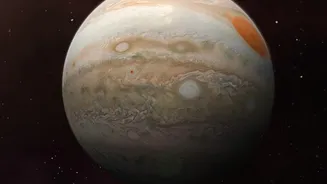
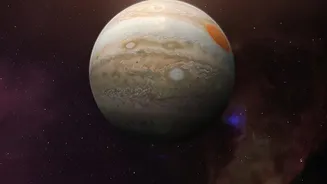
Jupiter is a fantastic first target because it's one of the brightest objects in the night sky, often appearing as a brilliant, steady, white-yellow light. In September 2026, Jupiter is a dominant feature in the pre-dawn eastern sky. To find it, open your astronomy app and use the search function. An on-screen guide will direct you to pan your phone across the sky. As you get closer, you'll see Jupiter appear on your screen, perfectly aligned with its real-life counterpart. On the morning of September 8, 2026, you may even spot it near the crescent Moon, making for a beautiful pairing. Even without a telescope, just identifying this massive gas giant among the sea of stars is a deeply rewarding experience.
Hunting for Saturn: The Ringed Jewel
Saturn is another magnificent target, though typically fainter than Jupiter. It shines with a steady, yellowish-golden hue. Throughout September 2026, Saturn will be visible for most of the night, rising in the east shortly after sunset. This makes it a convenient planet to search for in the evening hours. Like with Jupiter, use your app’s search feature to guide you. The planet will be in a part of the sky without many other bright stars, which can make it easier to isolate. On September 26, 2026, the full Harvest Moon will be near Saturn, providing a helpful, albeit very bright, landmark. While you won't see its famous rings with the naked eye, just knowing you're looking at the stunning ringed planet from a bustling city is a moment of pure astronomical magic.