

A New Atlas of the Universe
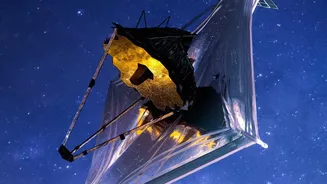
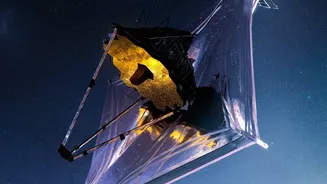
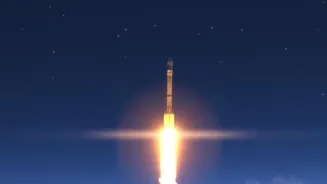
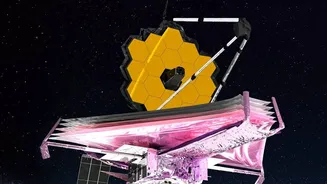
On August 30, 2026, a SpaceX Falcon Heavy rocket carried the Nancy Grace Roman Space Telescope into space, beginning its million-mile journey to a stable orbit. Named after NASA's first chief of astronomy, Nancy Grace Roman, this observatory is not just
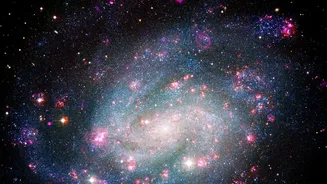
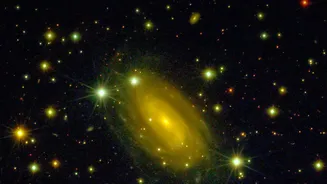
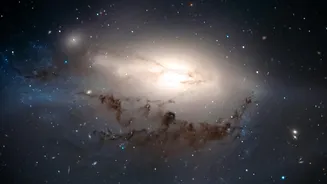
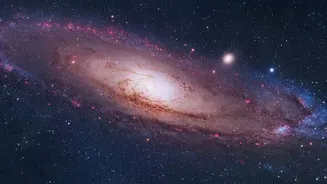
another telescope; it's a cosmic survey machine. Its primary tool is the Wide Field Instrument, a 300-megapixel infrared camera with a field of view at least 100 times larger than that of the Hubble Space Telescope. This incredible breadth allows Roman to map vast swathes of the sky with incredible speed and detail, essentially creating a new, high-definition atlas of the universe. While famous telescopes like Hubble and Webb zoom in on specific objects, Roman provides the panoramic context, capturing billions of galaxies to see how they fit into the grand cosmic structure.
Shining a Light on the Dark Universe
The most exciting part of Roman's mission is its focus on what we can't see. All the stars, planets, and galaxies visible to us make up only about 5% of the cosmos. The rest is a mysterious combination of dark matter (about 27%) and dark energy (about 68%). Dark matter is the invisible 'glue' whose gravitational pull holds galaxies together, while dark energy is the enigmatic force causing the universe's expansion to speed up. These two components dominate the universe, yet their true nature remains one of the biggest puzzles in modern physics. Roman was specifically designed to confront this puzzle head-on by mapping the invisible.
Hunting for Cosmic Clues
So, how do you study something that's invisible? Roman will use several clever techniques. To map dark matter, it will study a phenomenon called gravitational lensing. Massive objects, including clumps of dark matter, bend the fabric of spacetime, causing the light from distant galaxies to distort and magnify. By analyzing these tiny distortions in the shapes of billions of galaxies, astronomers can create a comprehensive 3D map of where dark matter is located. To investigate dark energy, Roman will conduct massive surveys of distant supernovae, or exploding stars. By measuring their brightness and how fast they are moving away from us, scientists can precisely track the expansion history of the universe and see if dark energy's influence has changed over time.
A Discovery Machine for Decades to Come
The sheer volume of information Roman will collect is staggering. NASA anticipates it will send back about 1.4 terabytes of data every day, the highest rate of any astrophysics mission to date. This torrent of data will do more than just study dark energy; it will also be used to conduct the largest census of exoplanets ever attempted, potentially discovering thousands of new worlds, including rocky planets and free-floating 'rogue' planets not tied to any star. The first images are expected by early 2027, kicking off a five-year primary mission that could be extended to ten. Scientists believe the data collected will be a goldmine for research for many decades, enabling discoveries that we can't even anticipate yet.