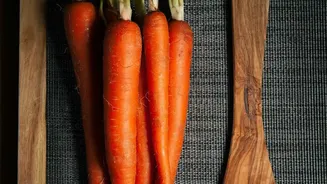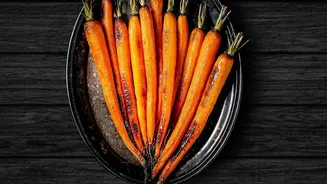


It’s a familiar kitchen mystery: you toss a handful of firm, crunchy carrots and a mountain of fresh spinach into a hot pan. Minutes later, the carrots are tender and sweet, while the spinach has shrunk into a fraction of its former self.
The Cellular Blueprint of a Vegetable
To understand
this transformation, we need to think small—at a cellular level. All vegetables are made of plant cells, which have a few key features. Each cell is surrounded by a rigid cell wall, primarily built from a tough fiber called cellulose. Think of it as a tiny, sturdy box. These boxes are glued together by another substance called pectin. Inside each cell is a large, water-filled sac called a vacuole. The pressure this water exerts against the cell wall, known as turgor pressure, is what gives raw vegetables like carrots their satisfying crunch and leafy greens their crispness. When you cook a vegetable, you’re applying energy—heat—that systematically breaks down this structure.
The Case of the Sturdy Carrot
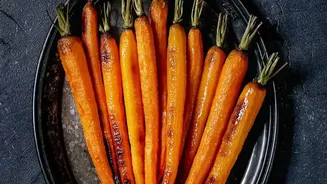
A carrot is a root vegetable, a storage organ for the plant. Its structure is dense, and its cell walls are thick and reinforced with plenty of pectin 'cement'. When you heat a carrot, the primary change is the slow dissolving of this pectin. As the pectin breaks down, the bond between the cells weakens, allowing them to separate more easily. The cellulose walls themselves also soften with prolonged heat. This is a gradual process, which is why carrots need a relatively long cooking time—whether roasting, boiling, or steaming—to go from rock-hard to pleasantly tender. It’s a controlled demolition, softening the structure without complete collapse.
The Story of Wilting Spinach
Spinach tells a completely different story. As a leaf, its job is photosynthesis, not long-term storage. Its cells are much more delicate, and a whopping 90% of its weight is just water held inside those vacuoles. When heat hits a spinach leaf, the thin cell membranes rupture almost immediately. This causes a massive and rapid release of water. The turgor pressure plummets to zero, and the entire structure collapses. This is why a huge pile of spinach can shrink down to a small, dense mound in under a minute. Some of this breakdown is also aided by oxalic acid, a compound naturally present in spinach, which can further weaken cell walls when heated. The change is less about softening a rigid structure and more about a sudden loss of volume as water escapes.
It's All About Walls and Water
So, the dramatic difference comes down to structure and water content. Cooking a carrot is a process of tenderizing its tough, fibrous framework by dissolving the pectin glue that holds it together. It retains much of its shape because the cellulose walls, while softer, are still largely intact. Cooking spinach, on the other hand, is a story of rapid dehydration. The heat breaks open the delicate, water-filled cells, causing them to deflate like millions of tiny water balloons. The former shrinks by tenderizing, the latter shrinks by collapsing.
Putting the Science into Practice
Understanding this science can make you a more intuitive cook. For dense, sturdy vegetables like carrots, parsnips, and potatoes, you need cooking methods that allow time for heat to penetrate and break down the pectin—like roasting, simmering, or steaming. For delicate, high-water vegetables like spinach, chard, and other leafy greens, quick, high_heat methods are often best. A fast sauté evaporates the released water quickly, cooking the leaves without letting them sit and boil in their own liquid, which can lead to a mushy texture. By respecting the unique cellular structure of each vegetable, you can better control its final texture and bring out its best qualities on the plate.