







The Two Modes of Learning
To understand the risk, we first need to distinguish between two ways our brains learn: actively and passively. Passive learning is what happens when you absorb information without much effort—think watching a lecture, listening to a podcast, or reading
a pre-written summary. It’s a one-way street where information flows into your brain. Active learning, on the other hand, is a two-way process. It involves struggle and engagement. [2] When you actively learn, you aren’t just receiving information; you're doing something with it. This includes things like solving problems, debating ideas, connecting different concepts, and trying to explain a topic in your own words. Research consistently shows that the effort involved in active learning is what makes knowledge stick, leading to deeper comprehension and better memory retention. [2]
How AI Encourages a Passive Approach
Artificial intelligence, particularly generative AI, is exceptionally good at eliminating the friction that often leads to active learning. AI-powered tools are designed for efficiency, and they achieve this by doing the cognitive heavy lifting for us. For example, AI summarisation tools can digest a dense report and give you the key takeaways in seconds. [22] Search engines now provide direct AI-generated answers, removing the need to sift through and evaluate different sources. [22] Social media and video platforms use sophisticated algorithms to feed you an endless stream of content perfectly tailored to your existing interests, so you never have to actively search for what to watch next. While convenient, this process reduces our role to that of a passive consumer, simply accepting pre-packaged information without question. [9, 18]
The Cognitive Price of Convenience
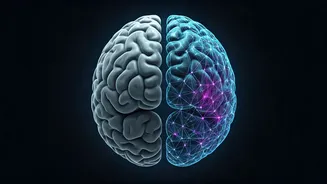
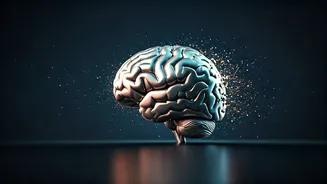
Relying too heavily on AI to learn carries significant risks for our cognitive abilities. This phenomenon, known as 'cognitive offloading,' happens when we delegate thinking tasks to external tools. [3] Studies are beginning to reveal a negative correlation between frequent AI use and critical thinking skills. [5, 14] When we don't have to struggle to synthesise information, our brains don't form the strong neural pathways needed for long-term memory. [9] Our critical thinking muscles can atrophy because we aren't practicing the skills of evaluating sources, identifying bias, and constructing logical arguments. [1, 15] One study even found that students who relied heavily on AI dialogue systems showed diminished decision-making and analysis abilities. [3] Over time, this intellectual outsourcing can make us less resilient when faced with complex problems without technology to assist us. [17]
From Passive Consumer to Active Collaborator
The solution is not to abandon AI, but to fundamentally change our relationship with it. Instead of using it as an 'answer machine,' we should treat it as a 'thinking partner'. [10] This means shifting from passive consumption to active collaboration. For instance, instead of asking an AI to write an essay, a student could ask it to critique their draft, act as a debate partner arguing the opposing view, or generate quiz questions to test their understanding. [10, 15] Educators are exploring new assignments that require students to use AI as a starting point, then critically evaluate its output for errors or biases. [10] This approach still leverages AI’s power but puts the human learner back in the driver's seat, forcing them to engage, analyse, and create. It transforms AI from a crutch that weakens our skills into a tool that sharpens them. [7]