



The New Digital Makeup Counter
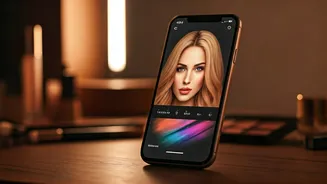
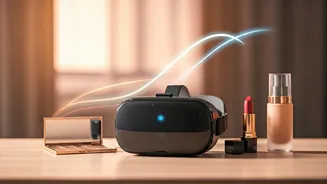
The beauty industry is undergoing a significant digital transformation, and at its heart is virtual try-on (VTO) technology. Powered by Artificial Intelligence (AI) and Augmented Reality (AR), this innovation allows shoppers to see how different products
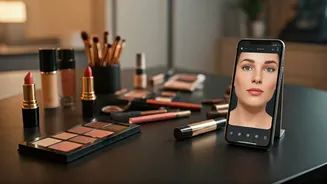
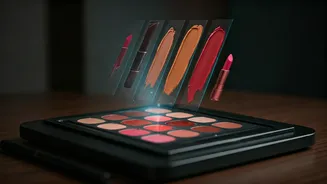
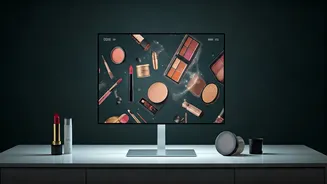
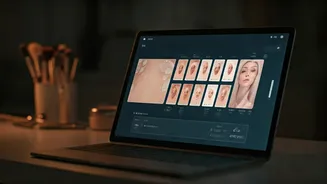
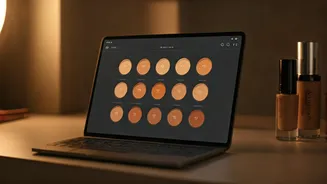
like lipstick, foundation, and eyeshadow will look on their own faces in real-time, using just their phone or computer camera. Major online retailers in India, such as Nykaa and Myntra, have integrated this technology, bringing a futuristic shopping experience to millions of consumers. Instead of relying on touched-up product photos or visiting a physical store to use a tester, you can now experiment with dozens of shades and styles from the comfort of your home.
Behind the Glamorous Tech
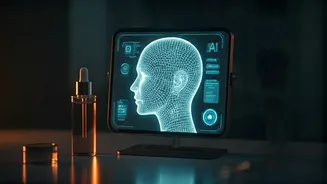
So, how does it work? The process is a sophisticated blend of AI and AR. When you activate the virtual try-on feature on a website or app, the AI uses your device's camera to perform complex facial recognition. It detects and maps more than a hundred specific points on your face, like the corners of your mouth, the shape of your eyes, and your cheekbones, creating a precise 3D mesh. Then, Augmented Reality overlays the digital makeup product onto this map. The AI ensures the colour and texture move realistically with your facial expressions, providing a surprisingly lifelike preview. This technology analyzes information from the makeup brands themselves, as well as images and descriptions online, to render the shades as accurately as possible.
Why Major Brands Are All In
For beauty companies, investing in this technology is more than just a novelty; it’s a smart business decision. Brands like L'Oréal, which acquired the leading AR beauty tech company ModiFace, and competitors like Perfect Corp., which powers the popular YouCam Makeup app, are at the forefront of this shift. In India, platforms like Myntra have reported that using the VTO feature can lead to a twofold increase in conversions for makeup products. The benefits are clear: it increases customer engagement, boosts purchasing confidence, and significantly reduces the rate of product returns, which has long been a challenge for online cosmetics sales. By allowing customers to 'try before they buy,' brands build trust and create a more personalized shopping journey.
The Perks of a Pixel-Perfect Pout
For shoppers, the advantages are numerous. The most obvious is convenience—you can try on an entire store's worth of lipstick shades at midnight, without leaving your bed. It also offers a hygienic alternative to the communal testers found in stores, a concern that became especially prominent in recent years. Furthermore, virtual try-on encourages experimentation. You can test a bold blue eyeliner or a dramatic dark lipstick you might have been too shy to try in public. This risk-free exploration helps consumers discover new products and styles they love. Many tools also let you compare looks side-by-side or share with friends for a second opinion before making a purchase.
Not a Flawless System Yet
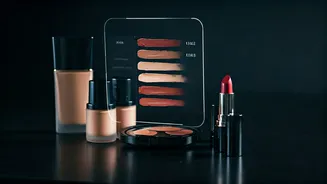
Despite its advancements, virtual try-on technology isn't perfect. One of the biggest challenges is colour accuracy. The final look can be heavily influenced by factors like the quality of your device's camera, screen calibration, and the lighting in your room. What looks like the perfect nude shade under your warm living room light might appear completely different in daylight. Another significant hurdle is realistically representing texture and finish—the difference between a matte, satin, or glossy lipstick can be hard to simulate perfectly. Companies are continuously working to improve their algorithms, with a particular focus on ensuring the technology works equally well across the vast diversity of human skin tones.