




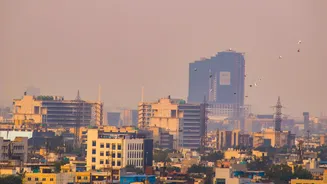
The Monsoon's Great Wash
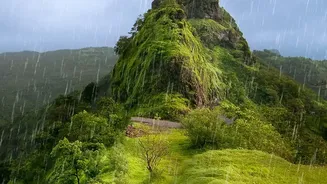
Throughout the monsoon season, from roughly June to September, heavy and sustained rainfall provides a natural cleansing service for the atmosphere. Rain droplets capture and wash away suspended particulate matter, dust, and other pollutants, a process
known as wet deposition. This is why skies often appear brighter and the air feels fresher after a downpour. The consistent rain effectively flushes out a significant portion of the daily emissions from traffic, industry, and construction. However, this relief is temporary. Studies show that pollution levels can rebound within 24 to 48 hours after a rain spell stops, highlighting that the underlying sources of pollution are constant.
When Cooler Air Becomes a Trap
As the monsoon retreats in October, the weather patterns across northern India change dramatically. Temperatures begin to drop, and wind speeds decrease, reducing the atmosphere's ability to disperse pollutants. This period sees the onset of a phenomenon called thermal inversion. Normally, air is warmer near the ground and gets cooler with altitude, allowing pollutants to rise and scatter. During an inversion, a layer of warmer air settles above a layer of cooler air near the surface, acting like a lid. This traps all the pollutants from vehicles, industry, and other sources in the cold air near the ground, concentrating them in the air we breathe. The unique geography of the Indo-Gangetic Plain, bordered by the Himalayas, can further exacerbate this 'bowl effect', preventing the trapped, polluted air from escaping.
The Annual Problem of Stubble Burning
Coinciding perfectly with this meteorological shift is the harvest of the paddy crop in states like Punjab and Haryana. Farmers are left with a very short window to clear their fields to sow the next crop, wheat. Burning the leftover crop stubble, or 'parali', is the fastest and cheapest method to do so. This practice releases enormous plumes of smoke, rich in particulate matter (PM2.5 and PM10) and other toxic gases. These emissions don't stay local; prevailing winds carry them hundreds of kilometres across the Indo-Gangetic Plain, directly into cities like Delhi. Studies have confirmed that smoke from these agricultural fires is a dominant contributor to the severe post-monsoon smog, at times accounting for over a third of the hazardous PM2.5 levels in the capital.
Festivals, Traffic, and Baseline Pollution
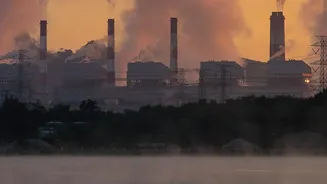
Adding another layer to this perfect storm is the festival season, particularly Diwali. The widespread use of firecrackers can cause a massive, albeit short-lived, spike in air pollution, increasing concentrations of particulate matter by nearly 100% in a matter of hours. This sudden burst of pollutants occurs at the very time when the atmosphere is least capable of dispersing them due to the inversion layer. It's crucial to remember that these seasonal events pile on top of the year-round, or 'baseline', pollution generated within the cities themselves. Emissions from vehicles, industrial activity, construction dust, and waste burning are a constant presence. During the post-monsoon months, these everyday pollutants are simply trapped more effectively, leading to the dangerously high Air Quality Index (AQI) readings that have become an annual public health concern.
The Impact on Health
The combination of these factors creates a toxic cocktail that has serious health consequences. The fine particulate matter, PM2.5, is particularly dangerous as it can penetrate deep into the lungs and even enter the bloodstream, causing respiratory problems, aggravating conditions like asthma, and increasing the long-term risk of cardiovascular diseases and even lung cancer in non-smokers. The annual smog is not just an inconvenience; it is a major public health event that contributes to millions of premature deaths in India every year. As the post-monsoon dampness and temperature swings begin, hospitals often see a rise in patients with coughs, wheezing, and other respiratory distress.