






A New Policy Universe
The single biggest catalyst for the startup boom has been a radical shift in government policy. Starting in 2020, India began a series of reforms to open the space sector to private enterprise. The landmark Indian Space Policy 2023 clearly demarcated
the roles of the private sector and government bodies. It established the Indian National Space Promotion and Authorisation Centre (IN-SPACe) as a single-window agency to promote, authorise, and supervise private space activities. This move provided regulatory clarity and a stable framework, encouraging entrepreneurs to enter a domain previously reserved for the Indian Space Research Organisation (ISRO). Further liberalisation of Foreign Direct Investment (FDI) rules now allows up to 100% FDI in certain segments, signaling to global investors that India is serious about building a commercial space ecosystem.
The ISRO Springboard Effect
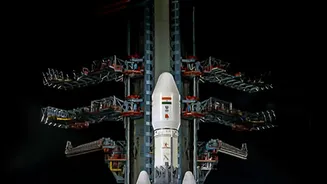
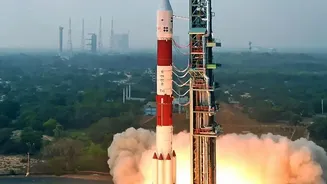
Rather than being replaced, ISRO is evolving into a new role as the anchor and R&D engine of the national space ecosystem. For decades, ISRO built a formidable foundation of technology, talent, and infrastructure. Today, private startups are leveraging this legacy. IN-SPACe facilitates access to ISRO's world-class testing facilities and technical expertise, significantly lowering the barrier to entry for new companies. ISRO is actively transferring mature technologies, such as those for the Small Satellite Launch Vehicle (SSLV), to private firms for large-scale production. This strategic shift allows ISRO to concentrate on advanced research, deep space exploration like the Chandrayaan and Gaganyaan missions, and national security, while the private sector handles more routine manufacturing and launch services. The availability of former ISRO scientists as mentors also provides invaluable guidance to young startups.
Follow the Money: A Surge in Investment
Ambitious projects require significant capital, and investors are taking notice. India's space-tech sector has witnessed a dramatic increase in funding, growing from just $43 million in 2021 to a record $200 million in 2025. As of July 2026, the sector had raised a cumulative $871 million. This influx of capital comes from domestic venture funds, global institutional investors, and even sovereign wealth funds. The government has also stepped in with initiatives like a ₹1,000 crore Venture Capital Fund to support early-stage companies. Marquee startups like Skyroot Aerospace, which launched India's first privately developed orbital rocket, and satellite-makers like Pixxel and Dhruva Space have successfully raised significant funding rounds, proving the commercial viability of their models and boosting investor confidence across the ecosystem.
More Than Rockets: The Downstream Data Gold Rush
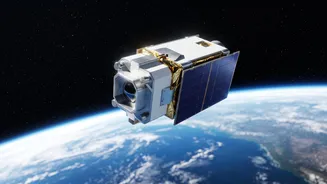
While rocket launches grab headlines, much of the commercial opportunity lies in downstream applications. Many startups are focused on using satellite data to provide valuable services on Earth. Companies like Pixxel are building constellations of hyperspectral imaging satellites that can provide insights for agriculture, climate monitoring, and disaster management. Others, like Digantara, are tackling the global problem of space situational awareness by developing systems to track orbital debris and manage space traffic. This focus on analytics and satellite-enabled services opens up a vast market, as data from space can be applied to countless industries, from finance and insurance to urban planning and logistics.
Building for the World, From India
Indian space startups are leveraging the nation's reputation for frugal engineering and cost-effectiveness to build solutions for a global market. By using advanced manufacturing techniques like 3D printing, companies such as Agnikul Cosmos are dramatically reducing the cost and time required to build rocket engines. This allows them to offer competitive, on-demand launch services for the booming global small-satellite market, competing with international players. The goal is not just to serve domestic needs but to integrate Indian companies into global space supply chains and establish India as a major hub for space technology and services. With a rapidly growing ecosystem of over 400 startups, the private sector is now seen as essential for India to achieve its goal of capturing a larger share of the $440 billion global space economy.