


Why Start with Bodyweight?
Before you even think about picking up a dumbbell or barbell, the most critical step is to perfect your form. Bodyweight exercises are the gold standard for beginners because they allow you to focus entirely on technique without the added risk of injury
from heavy loads. Every time you sit and stand, you're performing a version of a squat, making it a fundamental human movement. By starting with just your body, you build neuromuscular control—the communication between your brain and your muscles—which ensures you are activating the correct muscles like your quadriceps, hamstrings, and glutes. This creates a strong, stable foundation, so when you do decide to add weight, you’re building on solid mechanics, not reinforcing bad habits that can lead to strain or injury.
Mastering the Bodyweight Squat
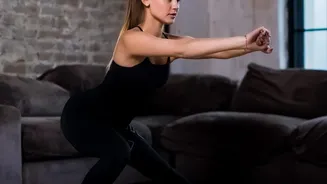
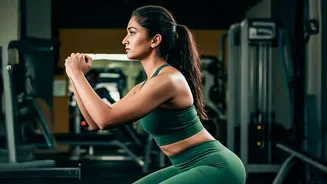
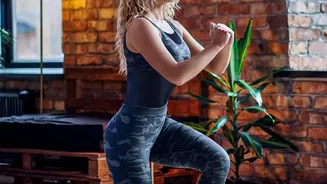
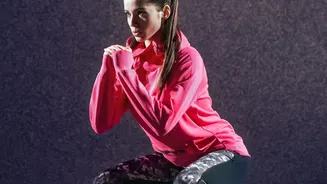
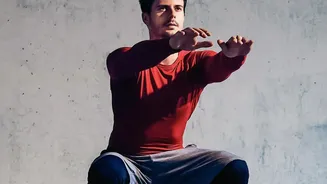
The squat is a powerhouse for developing the quadriceps and glutes. To perform it correctly, stand with your feet slightly wider than shoulder-width apart, with your toes pointing slightly outward. Keep your chest up and your back straight. Initiate the movement by pushing your hips back as if you’re about to sit in a chair, then bend your knees. Lower yourself until your thighs are parallel to the floor, or as low as you can comfortably go while maintaining good form. Ensure your weight is distributed evenly through your feet, and push through your heels to return to the starting position. Your arms can be extended in front of you for balance.
Common Squat Mistakes to Avoid
Perfecting the squat means being mindful of common errors. The most frequent mistake is letting your knees cave inward, which puts unnecessary stress on the joints. To combat this, actively think about pushing your knees out so they track in line with your toes. Another common issue is rounding your back or leaning too far forward. This can be avoided by keeping your chest lifted and engaging your core throughout the movement. Lastly, avoid rising from the squat with your hips shooting up before your chest; your hips and torso should rise at the same time for a controlled, powerful movement.
Perfecting the Bodyweight Lunge
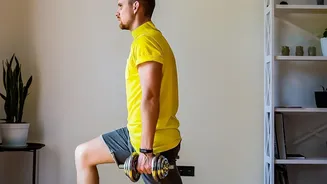
Lunges are a unilateral exercise, meaning they work one leg at a time. This is excellent for identifying and correcting muscle imbalances while also challenging your stability. To start a forward lunge, stand with your feet hip-width apart. Take a controlled step forward with one leg. Lower your hips until both knees are bent at approximately a 90-degree angle. Your front knee should be directly above your ankle, not pushed out over your toes, and your back knee should hover just above the floor. Keep your torso upright and your core engaged to maintain balance. Push off your front heel to return to the starting position, then repeat on the other side.
Common Lunge Errors and Fixes
The biggest challenge with lunges is maintaining balance. Many people step one foot directly in front of the other, as if walking on a tightrope. Instead, imagine you are on train tracks, keeping your feet hip-width apart even as you step forward. Another mistake is leaning your torso too far forward; focus on keeping your shoulders stacked over your hips. Also, ensure your front knee doesn’t travel past your toes, as this can strain the knee joint. If you feel wobbly, slow the movement down. Controlled, deliberate motions are far more effective than rushing through reps with poor form.
Creating a Beginner's Routine
To start building thigh strength, integrate both exercises into a simple routine. A good starting point is to perform three sets of 8-12 repetitions for both squats and lunges. For lunges, this means 8-12 reps per leg. Focus on the quality of each repetition, not the quantity. Once you can comfortably complete 12 reps of an exercise with perfect form, you can consider making it more challenging. This could mean increasing the number of reps, or eventually progressing to more advanced variations. Consistency is key; aim to do this routine two to three times a week, allowing your muscles at least a day of rest in between.