






From Domestic Success to Global Ambition
Launched in 2016, UPI revolutionised India's digital payment landscape, making bank transfers as simple as sending a text message. Its success, processing billions of transactions monthly, has been nothing short of phenomenal. The natural next step for
the National Payments Corporation of India (NPCI), UPI's operator, was to take this homegrown technology to the world. The primary goal is to make life easier for the millions of Indians who travel abroad for tourism, business, and education. By enabling payments directly from an Indian bank account, UPI's global expansion aims to reduce the reliance on currency exchange, forex cards, and high international transaction fees. It's also a powerful form of 'fintech diplomacy,' showcasing India's technological prowess on the world stage.
The Pioneers: Where Can You Use UPI Today?
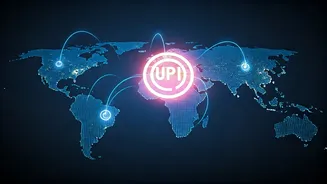
As of mid-2026, UPI is officially accepted in a growing list of countries, though the level of integration varies. The network includes Bhutan, Nepal, Singapore, the UAE, Mauritius, Sri Lanka, France, Qatar, and most recently, Cambodia and Greece. Bhutan was the very first to adopt the system, and it boasts wide acceptance. In Singapore, a key financial hub, UPI is linked with the local PayNow system, enabling seamless cross-border transfers. In the UAE, a popular destination for Indian tourists and professionals, UPI is available at thousands of retail outlets. France became the first European nation to welcome UPI, with other countries like Greece following suit. The most recent additions in 2024 were Sri Lanka and Mauritius, strengthening financial ties with these neighbouring island nations.
The Reality on the Ground
While the list of countries is impressive, the phrase 'UPI accepted here' doesn't mean it works in every single shop. Acceptance is often concentrated in tourist-heavy areas and with specific merchants who have partnered with NPCI's international arm, NIPL. For instance, in France, you can use UPI at iconic spots like the Eiffel Tower, but it's not yet ubiquitous in every Parisian cafe. Similarly, in countries like Sri Lanka and Qatar, UPI is available but still in a partial or growing phase of deployment. The user experience can be inconsistent, with some transactions failing due to network incompatibility or lack of merchant awareness. Therefore, while you can certainly use UPI abroad, it's wise to carry a backup payment method like a forex card or some local currency.
The Challenges of Going Global
Expanding a payment system globally is a complex task. One of the biggest hurdles is navigating the unique financial regulations and data privacy laws of each country. A system built for India must be adapted to comply with international standards like Europe's GDPR. Another major challenge is interoperability. UPI has to integrate with the existing payment ecosystems of other countries, which can be technically and commercially difficult. Established players like Visa and Mastercard have dominated the global payments landscape for decades, and competing with their extensive networks is a significant undertaking. The current approach involves forging bilateral agreements country by country, which is a slow and resource-intensive process.
What's Next for Global UPI?
Despite the challenges, the momentum is strong. NPCI International is in active discussions with over 30 countries to expand the UPI network. Talks are ongoing with several nations in East Asia, including Malaysia, Thailand, and Japan, which are popular destinations for Indian tourists. Indonesia is also set to integrate UPI, with ambitions to use India's digital public infrastructure as a blueprint for its own systems. The Reserve Bank of India's 'Payments Vision 2025' has set an ambitious goal to roll out UPI across 20 countries by FY29. To accelerate this, NPCI is exploring multilateral arrangements, potentially linking UPI with broader platforms to gain access to a wider merchant network in one go. Partnerships with global banks are also being forged to enable real-time foreign exchange conversion, making transactions more transparent for users.