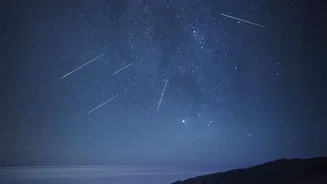







A Gift from Halley's Comet
The Orionid meteor shower is an annual event that occurs when Earth passes through the dusty debris trail left behind by one of the most famous comets in history: 1P/Halley. While the comet itself only visits the inner solar system every 76 years (its
next return is in 2061), its legacy provides two yearly meteor showers: the Eta Aquarids in May and the Orionids in October. These 'shooting stars' are actually tiny fragments of rock and ice, shed by the comet, burning up as they enter our atmosphere at incredible speeds of around 66 kilometres per second. This high velocity often creates bright, fast meteors, some of which can leave persistent, glowing trails in the sky.
Peak Viewing Dates and Times for India
For observers in India, the Orionid meteor shower will be active from early October through early November. However, the best time to watch will be during its peak, on the night of October 21 and into the early morning hours of October 22, 2026. There is a challenge this year: a bright waxing gibbous moon will be present for much of the night, its glare washing out the fainter meteors. But don't be discouraged. The ideal viewing window opens in the pre-dawn hours, after the moon sets (around 3 a.m. local time) and before the sky begins to brighten with sunrise. This period of darkness will be your best opportunity to see the meteors. Under perfect conditions, you might see between 10 to 20 meteors per hour.
How to Watch the Spectacle
The best part about watching a meteor shower is that you don't need any special equipment. In fact, telescopes and binoculars are not recommended as they limit your field of view, and meteors can appear anywhere in the sky. Your eyes are the best tool for the job. Find a comfortable spot, perhaps with a reclining chair or a blanket on the ground, so you can lie back and look straight up. The meteors will appear to radiate from the constellation Orion, but you don't need to stare at that specific point. It's better to scan a wide area of the sky. Be patient; it takes about 20 to 30 minutes for your eyes to fully adjust to the darkness, after which you'll begin to spot more meteors.
Finding the Perfect Dark Sky
The key to a successful meteor-watching experience is getting away from light pollution. City and street lights drastically reduce the number of visible meteors. While you might catch a few bright ones from a city like Delhi or Mumbai, travelling to a darker, rural location will dramatically improve your chances. Look for open fields, hilltops, or remote areas with an unobstructed view of the night sky. High-altitude, less populated regions like Ladakh or parts of Spiti Valley are renowned for their dark skies. For those in other parts of the country, consider driving to the outskirts of your city or visiting designated dark sky locations. Places like the Rann of Kutch in Gujarat or desert areas in Rajasthan also offer excellent, clear viewing conditions.
Essential Tips for a Great Night Out
Once you've found your spot, a few simple preparations can make the experience more enjoyable. October nights can get chilly, especially in remote or high-altitude areas, so dress in warm layers and consider bringing blankets. To preserve your night vision, avoid looking at your bright phone screen. If you need a light, use a torch with a red filter. Finally, patience is crucial. Meteor showers are not a constant downpour; they come in spurts. Settle in, get comfortable, and enjoy the quiet majesty of the night sky while you wait for nature's fireworks to begin.