






He Could Have Played for Spain
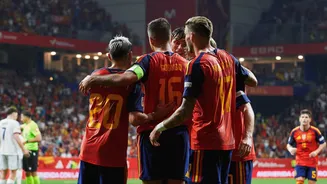
It’s one of the biggest ‘what ifs’ in modern football history. Having moved to Barcelona at 13, Messi was eligible for Spanish citizenship. The Royal Spanish Football Federation saw his generational talent early on and made attempts to recruit him for their
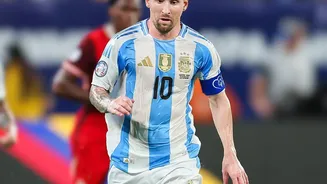
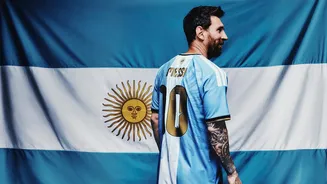
national youth teams. Imagine the legendary Spanish squad that won the 2010 World Cup, but with a prime Lionel Messi in the attack alongside his Barcelona teammates Xavi and Iniesta. However, Messi never wavered. He has stated that despite the opportunity, his heart was always set on representing his birth country. The Argentine Football Association, hearing whispers of Spain's interest, scrambled to arrange a friendly for the U-20 team just to get him on the pitch in an official capacity and secure his allegiance forever.
His Goal Celebration Is a Tribute to His Grandmother
Almost every time Lionel Messi scores, he performs a simple, consistent gesture: he points both index fingers towards the sky. This isn't just a random celebration; it’s a deeply personal tribute to his maternal grandmother, Celia Olivera Cuccittini. His grandmother was his first and most passionate supporter, the one who pushed a reluctant local coach to put a tiny, four-year-old Messi into a game against bigger kids. She was convinced of his talent long before anyone else and took him to his first matches and training sessions. Tragically, she passed away when he was just ten years old and never saw him play professionally. By pointing to the sky, Messi acknowledges that he believes she is still watching over him, a silent thank-you after every goal.
The Origin of His Nickname, ‘The Flea’
Fans around the world know him by the nickname ‘La Pulga’, which is Spanish for ‘The Flea’. It wasn't given to him by the media but dates all the way back to his childhood in Rosario. His older brothers, Rodrigo and Matias, first started calling him ‘La Pulgita’ (The Little Flea) as a playful tease. The name was a reference to his tiny stature, especially when playing against bigger kids, and his hyperactive, buzzing energy. The nickname perfectly captured his playing style: small, agile, and almost impossible to catch once he starts moving, darting between defenders with a low centre of gravity. The name stuck, evolving from a family joke to a globally recognised moniker that perfectly describes his unique genius on the pitch.
He Has Italian Roots and Citizenship
While he is a proud Argentine, Messi’s heritage is deeply rooted in Europe. Both sides of his family have Italian ancestry, with his paternal great-grandfather, Angelo Messi, emigrating from the Italian town of Recanati to Argentina in 1883. His mother's family, the Cuccittinis, also trace their lineage back to Italy. Because of this heritage, Messi holds Italian citizenship and possesses an Italian passport. This was practically useful early in his Barcelona career, as it allowed him to be registered as a European Union player, bypassing the strict quotas for non-EU players in La Liga. While his identity is firmly Argentine, his Italian roots are an interesting part of the story that shaped his family's journey.
His First Barcelona Contract Was on a Napkin
The story of how Barcelona secured the greatest player in their history is the stuff of legend. After a successful trial as a 13-year-old, negotiations with the club stalled, and Messi’s father, Jorge, grew frustrated with the lack of a firm commitment. Fearing they would lose the prodigious talent, Barcelona’s sporting director, Carles Rexach, made a decisive move. At a lunch meeting in a tennis club, with no official paper on hand, Rexach grabbed a simple paper napkin and wrote out a contract. The napkin served as a formal commitment, stating the club agreed to sign Lionel Messi despite some dissenting opinions. That very napkin, which sealed a deal that would change football history, was recently sold at auction for nearly a million dollars.