






A New Blueprint for Deep Space
For decades, the model for space exploration was straightforward: NASA designed, built, and operated its own rockets and spacecraft. But a major strategic shift is now in full swing. Instead of acting as the sole architect and builder, the agency is increasingly
becoming an expert customer, purchasing services from a growing market of commercial space companies. This public-private partnership model was successfully proven with commercial cargo and crew deliveries to the International Space Station, which dramatically lowered costs. Now, NASA is applying this same logic to more ambitious, deep-space science missions. By doing so, it frees up its own resources to focus on what it does best: pioneering scientific discovery and developing the next generation of instruments to explore our solar system and beyond.
More Than Just a Ride to Orbit
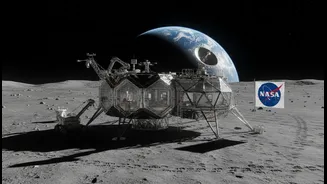
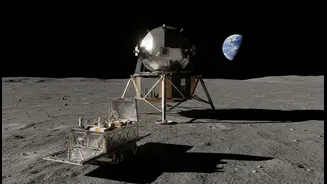
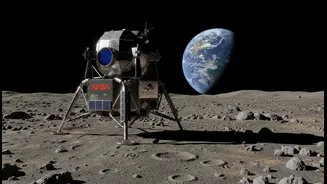
The evolution of these partnerships has moved beyond simple cargo runs. Today, commercial companies are being entrusted with launching and, in some cases, operating spacecraft carrying priceless, one-of-a-kind scientific instruments. A prime example is the recently announced Aeolus mission, scheduled to launch in 2028. In this groundbreaking partnership, NASA is providing the sophisticated instrument suite, while Relativity Space is responsible for the spacecraft, the rocket launch, and the interplanetary flight operations to get it to Mars. This isn't an isolated case. From small CubeSats studying Earth's climate to probes heading to the Moon, companies like SpaceX, Blue Origin, and Firefly Aerospace are now integral to NASA's scientific ambitions.
The Martian Proving Ground
This model matters now more than ever because of Mars. The Red Planet is the ultimate goal of NASA's human exploration efforts, but getting there is an incredibly complex and expensive undertaking. The new public-private model offers a more sustainable and affordable path. For the Aeolus mission, the data on Martian winds, dust, and atmospheric density is not just for scientific curiosity; it is essential knowledge needed to safely land future robotic and human missions. By having a commercial partner handle the delivery, NASA can increase the frequency of such crucial precursor missions without the massive price tag of a traditional, fully government-led project. This approach, sometimes called Commercial Mars Payload Services (CMPS), treats a mission to Mars like a commercial delivery service, a radical departure from past strategies.
The Economic and Innovation Engine
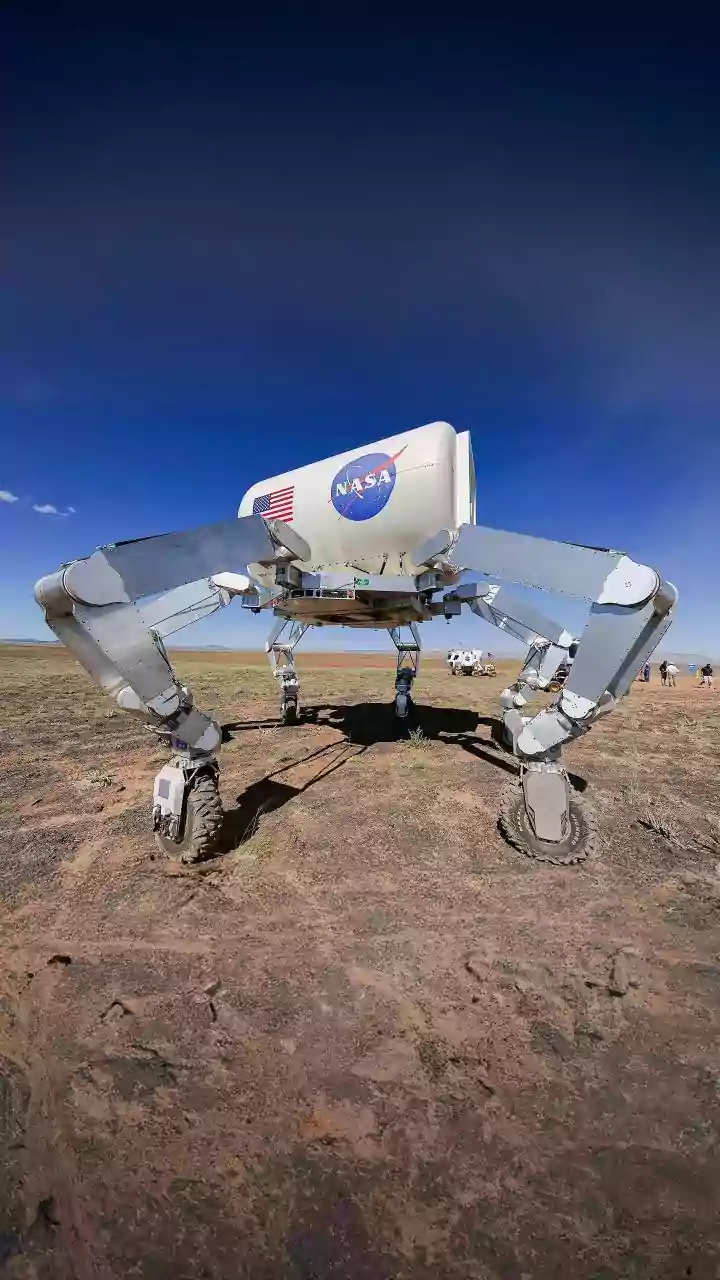
The benefits extend beyond NASA's budget sheet. This strategy is deliberately designed to foster a robust American space economy. By providing contracts for lunar and Martian missions, NASA acts as an anchor customer, giving companies the experience and financial stability to innovate and serve other potential markets. The competition for these fixed-price contracts incentivizes companies to become more efficient, driving down costs for everyone, including the taxpayer. It also accelerates technological development in areas from advanced composites for heatshields to new robotic mobility systems, as seen in recent contracts awarded to firms like Firefly Aerospace and others under the STRIDE initiative. This creates a virtuous cycle of investment, innovation, and capability that strengthens the entire industrial base.
The Road Ahead and Its Challenges
While promising, this model is not without risks. NASA is placing immense trust in its commercial partners, some of whom are still proving out their technologies. For instance, Relativity Space's Terran R rocket, slated for the Aeolus mission, has yet to fly. The agency must therefore maintain rigorous oversight and insight to ensure its strict safety and mission success standards are met. Managing complex missions with multiple private partners also adds a new layer of coordination challenges. However, the success of the commercial crew and cargo programs has provided a powerful proof of concept. By embracing this calculated risk, NASA is betting that the speed, innovation, and cost savings offered by the private sector are the keys to unlocking the next great era of space exploration, turning the dream of a human presence on Mars into a concrete, achievable plan.