


The Alphonso: A Portuguese Connection
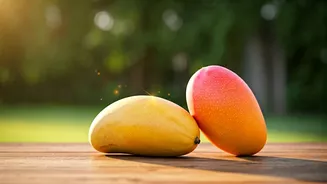
Let’s start with the one often called the ‘King of Mangoes’. The Alphonso, or Hapus, is not as ancient as one might think. Its story is deeply intertwined with the arrival of Europeans in India. Portuguese colonisers, particularly the Jesuit priests in Goa,
were masters of horticulture and pioneers of grafting techniques. They wanted to create hardier, more consistent fruit varieties. By grafting local mango trees, they developed a new cultivar with a firm, non-fibrous flesh, a honeyed sweetness with a citrusy tang, and a captivating aroma. They named it in honour of Afonso de Albuquerque, the Portuguese general who helped establish their colony in India. From the coasts of Maharashtra’s Konkan region, specifically in areas like Ratnagiri and Devgad, the Alphonso’s fame spread, eventually becoming India’s most prized mango export and a GI-tagged treasure.
The Dasheri: A Royal Mother Tree
Travel north, and the mango narrative changes completely. Here, the Dasheri reigns supreme. Unlike the grafted Alphonso, the Dasheri has a more romantic, singular origin story. Its lineage traces back to a single ‘mother tree’ in the village of Dasheri, near Malihabad in Uttar Pradesh. This magnificent tree, estimated to be over 200 years old, once belonged to the Nawab of Lucknow's orchards. Legend says its fruit was so exquisite that its seeds were ordered to be guarded. But some were smuggled out, and from this one tree, an entire dynasty of mangoes was born. The Dasheri is known for its sweet, fragrant pulp and elongated shape. More importantly, it is a crucial parent variety for many other famous North Indian mangoes, including Amrapali (a cross between Dasheri and Neelam), making it a true matriarch of the mango world.
The Langra: The Pride of Varanasi
The story behind the Langra is pure folklore. Originating from the holy city of Varanasi, this mango’s name literally translates to ‘lame’. The tale goes that the original tree was first grown in the backyard of a lame man, a fakir who was reluctant to share its incredible fruit. When the local king finally tasted it, he was so enamoured that the variety became famous, forever associated with its first cultivator. The Langra is easily identified by its greenish-yellow skin, even when ripe, and a distinct turpentine-like smell near the stem, which belies its incredibly sweet and slightly tart flavour. It’s a mid-season mango that has a fiercely loyal following, especially across Uttar Pradesh and Bihar, proving that a great story makes the fruit taste even sweeter.
The Kesar: Gujarat's Saffron Gold
Named for its vibrant saffron-coloured pulp (Kesar), this variety is the pride of Gujarat. Its history dates back to 1931, when it was first grown by the Nawab of Junagadh. He was so taken by its colour and fragrance that he famously called it “the Kesar.” This mango is a sensory delight, with a smell that is as much a part of the experience as its taste. Unlike the intense sweetness of some varieties, Kesar offers a balanced, sugary-sweet flavour with a subtle tropical tang. Its unique characteristics, tied to the arid climate of the Saurashtra region, particularly Gir, have earned it a GI tag. It is the go-to mango for making Aamras in Gujarat and is celebrated for its perfect pulp-to-stone ratio.
A Tapestry of Regional Heirlooms
The 'Big Four' are just the beginning. India’s mango lineage is a vast and complex tapestry. In the South, you have the Banganapalli from Andhra Pradesh, a large, pleasantly sweet mango with a thin skin. Move east, and West Bengal offers the Himsagar, a fibreless, intensely sweet and fragrant mango with a very short season, making it a rare delicacy. Then there’s the Chausa, a late-season marvel from Hardoi in Uttar Pradesh, known for its incredibly sweet, sugary pulp that you can often suck directly from the fruit. Each of these mangoes tells a story of its soil, its climate, and the generations of farmers who have cultivated it, creating a diverse genetic bank that is a national treasure.