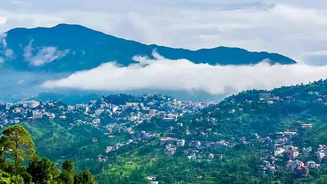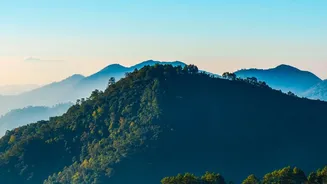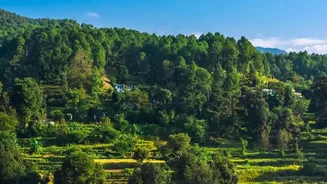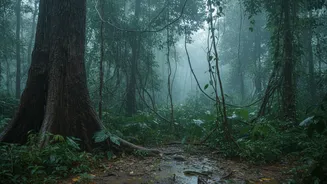






An Unpredictable Monsoon
The Indian monsoon has always been variable, but recent trends show a pattern of increasing unpredictability. Instead of steady, season-long rains, scientists observe more erratic and extreme weather. This includes intense, short bursts of rainfall followed
by prolonged dry spells. Studies by researchers at institutions like the Indian Institute of Technology (IIT) Bombay highlight that this increase in precipitation variability is a key driver of ecological stress. For example, a study focusing on central India's Panchmarhi Biosphere Reserve found a noticeable shift in precipitation from the post-monsoon to the pre-monsoon period over five decades, disrupting the forest's natural cycles. This change isn't just about the total amount of rain, but its timing and intensity, which can be more damaging than a simple decrease in annual rainfall. These shifts are creating what some scientists call "ecological droughts"—long-term moisture stress that impacts entire ecosystems, even during what should be the wet monsoon season.
From Lush Forest to Dry Savanna
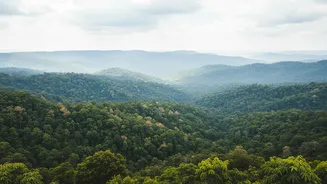
One of the most concerning potential outcomes of these rainfall changes is 'savannization'—the transformation of dense, closed-canopy forests into open, grassland-dominated savannas. A groundbreaking study from IIT Bombay projects that this transition could affect major Indian forests by the end of the century. This process is already being observed. Analysis of satellite data from 2001 to 2020 showed that while overall forest grid areas saw a slight increase, savanna-like areas with 10-40% tree cover expanded more significantly, growing from 9.2% to 11.7% of the landscape. This shift is particularly pronounced in dry deciduous forests, which are more vulnerable to moisture stress. In the Panchmarhi Biosphere Reserve, for example, dry teak forests experienced the most significant loss in canopy cover. This transition is not a simple loss of trees but a fundamental change in the ecosystem's structure and function.
A Cascade of Consequences
The redefinition of India's forests has far-reaching consequences. Ecologically, it poses a grave threat to biodiversity hotspots like the Western Ghats, home to thousands of plant species, many of which are endemic. As moisture-loving plants struggle, the entire food web is disrupted, affecting insects, birds, and large mammals. The change also impacts vital ecosystem services. Forests are crucial carbon sinks, and a transition to less dense savannas would weaken their ability to absorb CO2, potentially creating a feedback loop that accelerates warming. Furthermore, forest health is directly linked to water security. The vegetation in the Western Ghats, for instance, plays a critical role in regulating the monsoon and supplying moisture to the water-scarce eastern regions like Tamil Nadu. Some studies suggest that the Ghats' vegetation influences 25-40% of the region's monsoon rainfall. Its degradation could lead to increased droughts and destabilize a water cycle that millions depend on for agriculture and daily life.
The Path Forward: Adaptation and Conservation
The scientific community is not just sounding the alarm; it is also searching for solutions. Researchers emphasize the need for evidence-based forest management and adaptive climate policies. Understanding how different forest types respond to long-term climate variability is critical for predicting future changes and protecting vulnerable areas. Long-term monitoring projects, like the one in the Mudumalai Forest Dynamics Plot managed by the Indian Institute of Science, provide crucial insights into how factors like fire and drought regulate forest dynamics. Scientists argue that strategic conservation policies are pivotal to safeguarding these ecosystems. This includes not only protecting existing forests from deforestation but also managing them to be more resilient. Maintaining biodiversity is considered a key strategy, as a more diverse forest is more likely to contain species capable of surviving the changes, thus keeping the ecosystem intact.