





The Philosophy of Going Ultralight
The concept of 'ultralight' backpacking is more than a trend; it's a fundamental shift in how we approach the wild. A heavy pack doesn't just strain your back and knees; it tethers you to your gear, distracting you from the very environment you came to experience.
Every additional kilo is a tax on your energy and your enjoyment. By consciously choosing to carry less, you move more freely, cover more ground with less effort, and reduce the risk of fatigue-related injuries. This minimalist mindset forces you to prioritise what is truly essential, a valuable lesson that extends far beyond the trail.
Your Foundation: The Right Pack
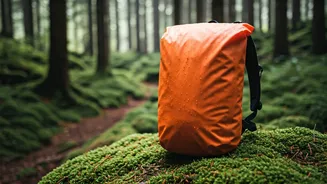
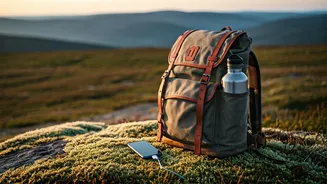
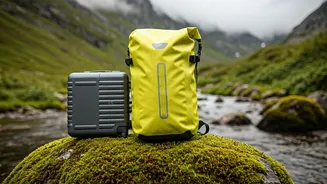
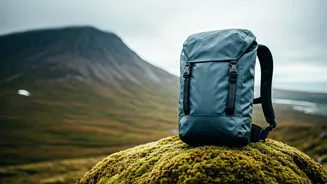
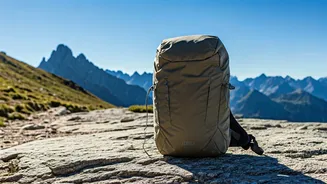
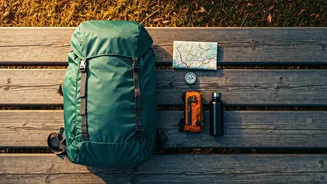
Your journey to an ultralight setup begins with the backpack itself. Traditional trekking packs, with their heavy frames, multiple compartments, and countless straps, can weigh over 2 kilograms before you've even packed a single item. An ultralight pack strips this down to the essentials. Look for frameless or minimalist-frame designs made from durable, waterproof materials like Dyneema Composite Fabric (DCF) or high-denier Robic nylon. These packs often weigh less than a kilogram. The trade-off is less built-in organisation, which encourages a more thoughtful packing system. A simple, large main compartment forces you to be disciplined, using dry sacks to compartmentalise your gear.
Ditching Digital: The 'Tech-Free' Advantage
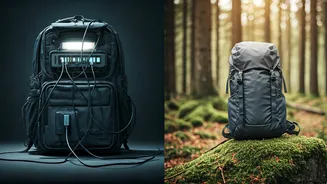
The headline’s call for “tech-free” luggage is a radical but rewarding idea. In an always-on world, the mountains offer a rare chance to disconnect. Leaving behind the GPS watch, tablet, and power banks isn't just about saving weight and space; it's about reclaiming your attention. Instead of scrolling, you watch the sunset. Instead of checking notifications, you listen to the birdsong. This doesn't mean compromising on safety. Replace your GPS with a physical map and a compass—and, crucially, the skills to use them. Swap your Kindle for a single paperback and your phone’s camera for a simple journal and pen to record your thoughts. This analog approach deepens your connection to the landscape and your own experience within it.
The Minimalist Wardrobe
Clothing is one of the easiest places to overpack. The key to a lightweight wardrobe is not having an outfit for every day, but having a system of versatile layers. Forget cotton; it absorbs moisture and takes forever to dry. Instead, build your system around merino wool or high-quality synthetics. You need just one of each layer: a moisture-wicking base layer (top and bottom), an insulating mid-layer (like a fleece or lightweight down jacket), and a waterproof/windproof outer shell (jacket and pants). Add a couple of pairs of wool socks, a hat, and gloves, and you are prepared for most conditions without the bulk.
Rethinking Shelter and Sleep
Your 'Big Three'—your pack, shelter, and sleeping system—account for the most weight. After choosing an ultralight pack, turn your attention to your home on the trail. A minimalist bivy sack or a simple tarp can save enormous weight over a conventional double-walled tent, provided you're comfortable with the exposure. For sleeping, consider a quilt instead of a traditional sleeping bag. Quilts eliminate the unnecessary compressed insulation underneath your body, saving weight and bulk. Pair it with a high-quality inflatable sleeping pad that offers a good balance of insulation (R-value) and low weight.