





What Is a Freestyle Dance Workout?
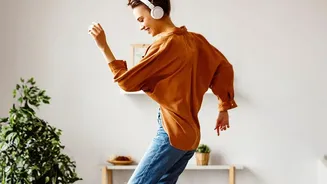
A freestyle dance workout is a form of exercise where you move your body spontaneously to music without following set choreography. Unlike a structured class, the goal isn't to master specific steps but to enjoy continuous, full-body movement. This makes
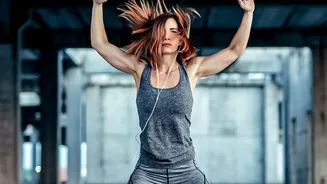
it an incredibly accessible and personal way to stay active. The benefits are extensive, ranging from improved cardiovascular health and muscle tone to better coordination and balance. Beyond the physical, it's a powerful stress reliever, capable of boosting your mood through the release of endorphins and helping you enter a state of 'flow'. It’s a workout for your body and mind, and the only equipment you need is some space and a great playlist.
Finding Your Foundational Moves
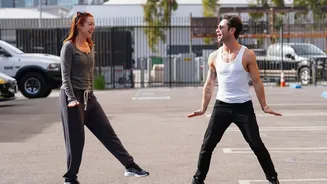
The word 'technique' can sound intimidating, but in freestyle, it's simply about having a library of basic moves you feel comfortable with. The key is to start small. Don’t worry about complex steps or what you 'should' be doing. Begin with simple, intuitive actions like marching in place, step-touches from side to side, gentle knee lifts, and relaxed arm swings. Other easy starters include hip sways, shoulder rolls, and gentle bounces. The aim is sustained movement, not perfect form. Once you have a few of these foundational moves, you can start creating variations by changing your speed, level, or direction. For example, a simple step-touch can become more dynamic by adding an arm reach or a small turn. Remember to always warm up first with light cardio and stretching to prepare your body and prevent injury.
The Secret is the Music
Music is the engine of a freestyle workout. It sets the pace, mood, and energy. When you’re starting, choose a song you absolutely love—one you could listen to on repeat. This makes it easier to let go and just move. Pay attention to the different layers in the music, from the main beat to the melody, and let your body react. Don’t feel pressured to move constantly or do 'tricks'. Sometimes, the best way to connect is to start small, perhaps just by swaying or tapping your foot to the beat before committing to bigger movements. If you feel overwhelmed, reset and focus back on just listening.
Choosing Your Perfect Tempo
Tempo, measured in beats per minute (BPM), is the speed of the music, and it directly influences your workout's intensity. Matching the BPM to your desired effort level can make the workout feel more natural and even reduce how hard it feels. For a dance workout, a good structure to follow is starting with a warm-up, building to a higher intensity, and then cooling down. A general guide for BPM ranges is: Warm-Up: 100–120 BPM. This is a comfortable pace to get your muscles warm and your heart rate up gradually. Main Workout: 130–160 BPM. This faster tempo is ideal for the cardio portion of your dance session, encouraging energetic movement. Cool-Down: 90–110 BPM. Slower tracks help bring your heart rate down safely and are perfect for stretching.
Building Your Ultimate Playlist
Creating your own playlist is part of the fun. Start by identifying the BPM of your favourite songs; you can use online tools or apps for this. Build your playlist to follow a workout arc: start with warm-up tracks, move into your high-energy cardio songs, and finish with cool-down music. Don't be afraid to mix genres to keep things interesting. Many people enjoy pop, house, hip-hop, and Latin music for their strong, consistent beats. Including some familiar throwback tracks can also be a great motivator. The most important rule is to choose music that makes you want to move. Whether it’s Bollywood beats, global pop, or classic rock, if the music feels good to you, you're more likely to stick with it and enjoy every minute.