



The Terroir of India’s Coffee Capital
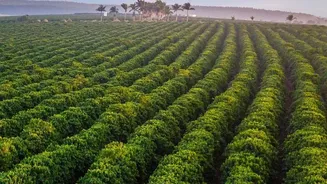
Nestled in the Western Ghats of Karnataka, Coorg (or Kodagu) is often called the “Scotland of India,” but for coffee enthusiasts, it's unequivocally the country's coffee capital. The region’s magic lies in its unique terroir—a combination of factors that
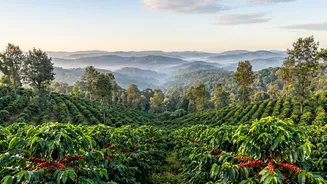
give the coffee its distinct character. The high altitudes, ranging from 1,000 to 1,500 metres, misty climate, and well-distributed rainfall create the perfect conditions for Arabica beans to thrive. The rich, loamy soil of these undulating hills provides an ideal foundation for coffee plants, allowing them to develop the complex flavours that make them so sought after. This environment ensures that the coffee cherries mature slowly, which results in a denser bean with a more nuanced and refined flavour profile.
The Advantage of Shade-Grown Arabica
A defining feature of Coorg’s coffee cultivation is the practice of shade-growing. Unlike sun-grown coffee, which often requires clearing land, most coffee in Coorg is cultivated under the canopy of native forest trees like jackfruit and rosewood. This agroforestry system does more than just preserve biodiversity by providing habitats for birds and insects. The shade protects the delicate Arabica plants from harsh direct sunlight, moderates temperatures, and allows the coffee cherries to ripen slowly and evenly. This slower maturation process is crucial; it allows the natural sugars in the fruit to develop more fully, resulting in a bean that has a smoother body, brighter acidity, and a more complex flavour profile when brewed.
A Flavour Profile Built for Espresso
So, what does this mean for your espresso cup? Everything. The high-pressure, rapid extraction of an espresso machine amplifies a bean's inherent characteristics. A bean that is thin or overly acidic will produce a disappointingly sharp and weak shot. Coorg Arabica, however, is naturally suited for this brewing method. It is celebrated for being full-bodied, with a balanced and mild acidity. The typical flavour profile is often described as having notes of chocolate and spice, with a smooth finish. Some even detect hints of cardamom and pepper, which may be influenced by the spices grown alongside the coffee plants. This combination creates an espresso that is rich and robust without being harsh, delivering that satisfying, full-bodied experience enthusiasts crave.
The Critical Role of Processing
The journey from a hand-picked cherry to a roasted bean involves a critical step: processing. In Coorg, the 'washed' or 'wet' method is commonly used. In this process, the skin and pulp of the coffee cherry are removed before the bean is dried. This method tends to produce a cleaner, brighter cup that highlights the bean's intrinsic acidity and flavour notes. While natural processing (drying the cherry whole) can add fruity and fermented notes, the washed process ensures a consistent profile that allows the chocolaty, spicy character of the Coorg Arabica to shine through clearly. This clean and balanced profile is particularly desirable for espresso, where consistency and clarity of flavour are paramount.