
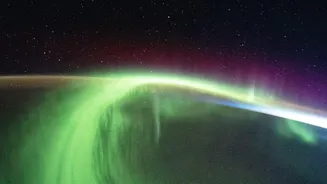
What Exactly Is a Solar Storm?
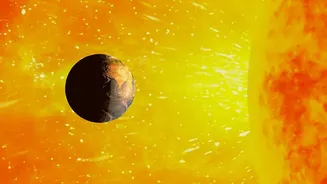
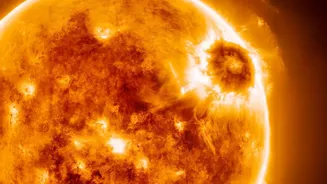
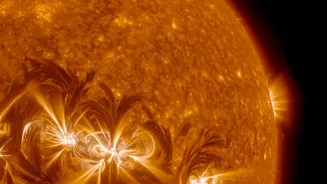
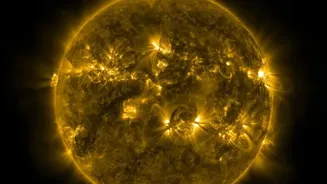
A solar storm is a disturbance on the sun, which can erupt in a couple of different ways. One is a solar flare, a tremendous explosion on the sun's surface that releases a burst of energy and intense radiation. The other, often associated with flares,
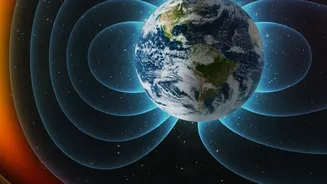
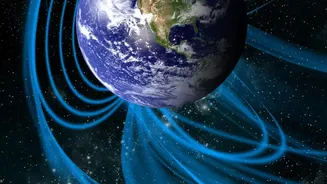
is a Coronal Mass Ejection, or CME. A CME is a massive bubble of plasma and magnetic field that gets hurled from the sun into space. These ejections can contain billions of tonnes of material and travel at incredible speeds, from 250 to 3000 kilometres per second. While many miss our planet, the ones directed towards Earth can take anywhere from 15 hours to several days to arrive, triggering what we call a geomagnetic storm when they interact with our planet's magnetic field.
The Impact on GPS and Navigation
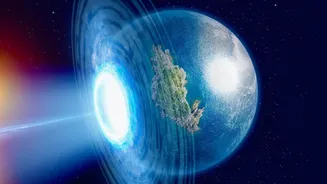
Our modern world runs on precise location data from Global Navigation Satellite Systems (GNSS), including the familiar GPS. These systems work by having a receiver on the ground calculate its position based on signals from multiple satellites. These signals must travel through Earth's upper atmosphere, specifically a layer called the ionosphere. When a solar storm hits, it supercharges the ionosphere with energetic particles, altering its density. This charged layer acts like a lens, bending and slowing down the satellite signals as they pass through. Standard GPS models can account for a normal, quiet ionosphere, but they can't keep up with the rapid changes during a storm. This results in positioning errors that can range from a few metres to tens of metres, or in severe cases, cause the receiver to lose its signal lock entirely. For industries like aviation, shipping, and precision agriculture, even small errors can have significant consequences.
Disrupting Radio Communications
Long-distance radio communication, especially in the High Frequency (HF) band (3-30 MHz), relies on the ionosphere to bounce signals back to Earth, allowing them to travel over the horizon. This is vital for aviation, maritime operations, amateur radio operators, and emergency services. During a solar flare, the burst of X-ray radiation can dramatically increase the density of the lower part of the ionosphere on the sunlit side of Earth. This denser layer doesn't reflect HF radio waves; it absorbs them, leading to a temporary but complete radio blackout that can last for minutes to hours. Geomagnetic storms can also cause radio signals to fluctuate wildly or take unexpected paths, leading to unreliable communications, particularly at high latitudes.
Forecasting and Staying Prepared
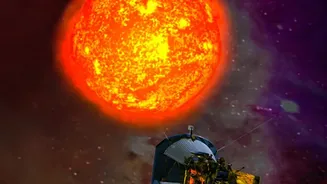
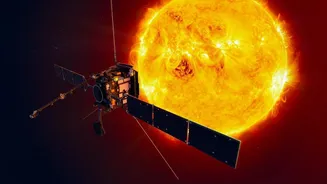
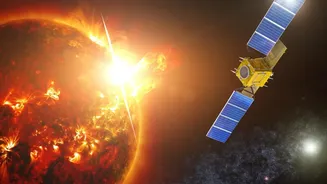
We are not powerless against the sun's temper. Space weather forecasters around the world, including India's Regional Warning Centre (RWC India), constantly monitor the sun. Using a combination of ground-based and satellite-based observatories, scientists watch for the formation of sunspots and active magnetic regions, which are precursors to flares and CMEs. This allows them to issue alerts and warnings, giving satellite operators, airlines, and power grid managers time to take protective measures. We are currently in an active period of the sun's 11-year cycle, known as Solar Cycle 25, which is expected to reach its peak activity level. This means an increased likelihood of solar events, making monitoring and prediction more important than ever to safeguard the technology we all depend on.