








Understanding OTOF-Related Deafness
An estimated 60% of hearing loss in newborns is caused by genetic factors. One rare cause involves mutations in the OTOF gene, which accounts for about 2% to 8% of all genetic hearing loss. This gene holds the instructions for making a protein called
otoferlin. In a healthy ear, otoferlin is essential for the inner ear's hair cells to communicate sound signals to the brain. When the OTOF gene is faulty, this protein isn't produced correctly, and the signal pathway is broken. The result is typically severe to profound deafness from birth, a condition known as auditory neuropathy, where the ear can detect sound but can't transmit the information to the brain.
The Science: A Biological Fix
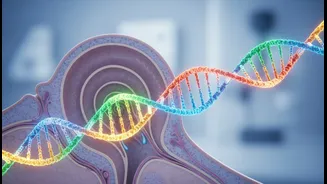
The new treatment is a form of gene therapy. The core idea is to deliver a correct, functional copy of the OTOF gene directly into the inner ear. To do this, scientists use a modified, harmless adeno-associated virus (AAV) as a delivery vehicle. During a minimally invasive surgical procedure, a surgeon makes a tiny injection into the inner ear, delivering the viral vector containing the healthy gene. This one-time treatment is designed to enable the inner ear's cells to start producing the crucial otoferlin protein, effectively repairing the broken communication link to the brain and restoring the biological hearing process.
Hearing for the First Time
The results from recent clinical trials have been nothing short of remarkable. Studies led by institutions like Children's Hospital of Philadelphia (CHOP) and Mass Eye and Ear, along with international teams, have shown that the therapy is not just safe but highly effective. In multiple trials, the vast majority of treated children—over 90% in one major study—experienced significant hearing restoration. Many went from profound deafness to being able to hear whispers and normal conversation within weeks of the treatment. An 11-year-old, the first patient treated in the U.S. at CHOP, regained hearing within 30 days after being deaf since birth. The improvements have been shown to be durable, lasting for over two years in some of the earliest participants.
What This Means for the Future
While this specific therapy, with variants like AK-OTOF and DB-OTO, targets a rare form of deafness, its success is a monumental proof of concept for the entire field of genetic medicine. It demonstrates that it is possible to biologically reverse a condition that was previously considered permanent. Scientists are excited because the delivery methods and principles used here could be adapted to tackle other forms of genetic hearing loss, which are caused by over 150 different genes. This breakthrough moves treatment beyond managing symptoms with aids or cochlear implants and toward a genuine cure at the genetic level. Researchers are already working on applying this platform to more common causes of genetic deafness.